
Day 18
Warm-Up and Cool-Down
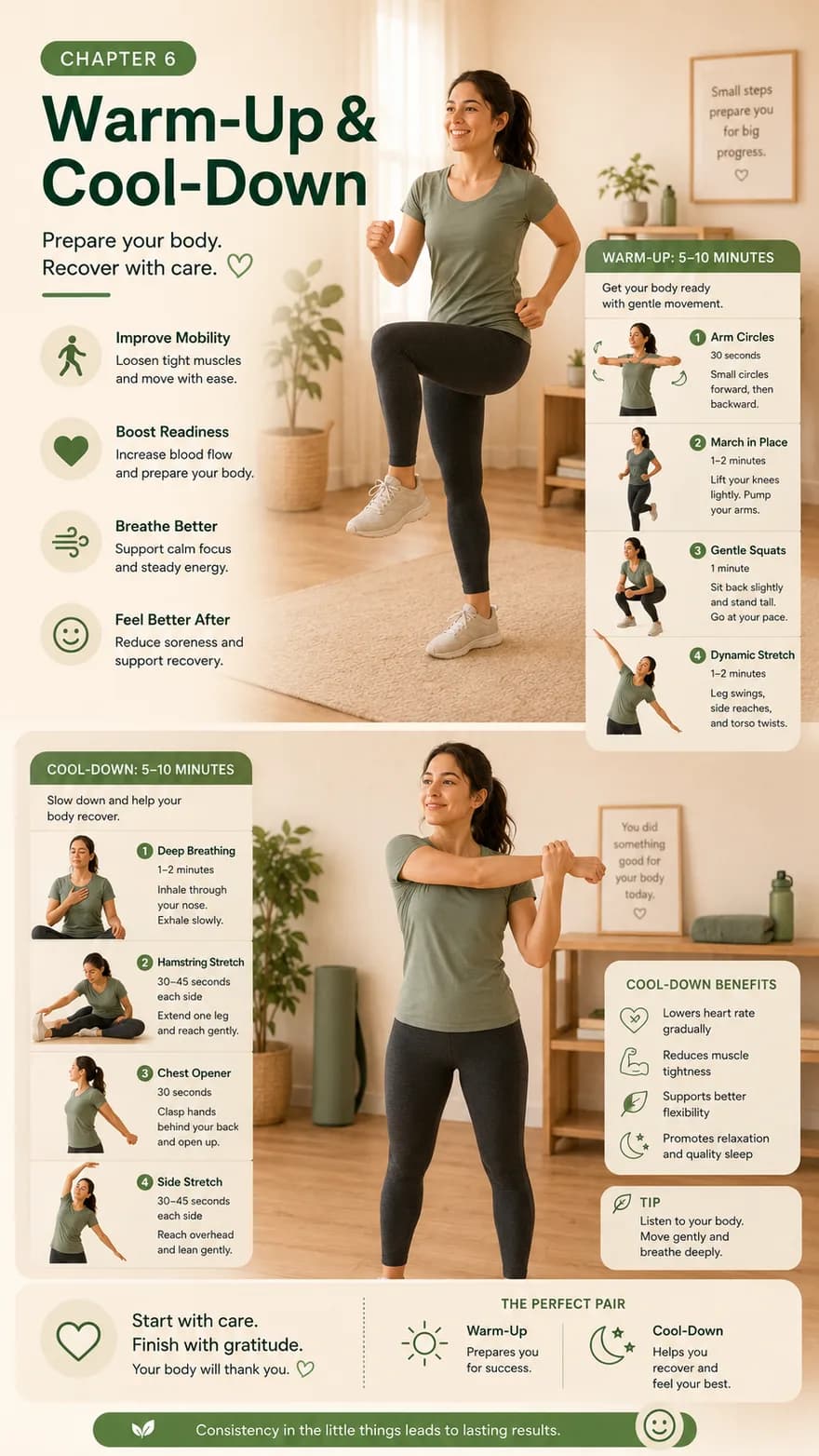
A good workout does not start with maximum effort. It starts with preparation. Many beginners want to jump straight into exercise because they feel motivated or want faster results. But your body usually performs better when you give it a few minutes to wake up first. A warm-up helps your joints, muscles, breathing, and heart rate get ready for movement. A cool-down helps your body slow back down after training. Today, you will learn how to use warm-ups and cool-downs in a simple, realistic way — without making your workout complicated.
Why Warming Up Matters
A warm-up prepares your body for exercise. When you warm up, your heart rate rises gradually, your breathing becomes more active, your muscles receive more blood flow, and your joints begin to move more smoothly. This can make movement feel easier and safer. A good warm-up tells your body: “We are about to move.” “Get ready.” “Wake up the muscles.” “Prepare the joints.” You do not need a long warm-up. Even 5 minutes can make a difference, especially for beginners.
Your Joints and Muscles Need Preparation
If you have been sitting, sleeping, working at a desk, or inactive for hours, your body may feel stiff. Jumping straight into exercise while stiff can feel uncomfortable. Your knees, hips, shoulders, back, ankles, and neck may need a little movement before harder activity. A warm-up helps your body move through a comfortable range before you ask it to work harder. This is especially important if you are new to exercise, returning after a break, overweight, or dealing with joint discomfort. Preparation is not weakness. Preparation is smart training.
Do Not Jump Straight Into Heavy Exercise
Starting too hard too quickly can increase discomfort and injury risk. For example: Lifting heavy weights without warm-up can make the muscles and joints feel unprepared. Running suddenly without preparation can stress the knees, ankles, or calves. Starting stairs too fast can make breathing feel difficult. Doing intense movements cold can increase stiffness or strain. This does not mean you should fear exercise. It means your body deserves a transition from rest to effort. Start easier. Then build.
Simple Warm-Up Movements
A warm-up should be simple and gentle. Good beginner warm-up options include: Easy walking Slow treadmill walking Arm circles Shoulder rolls Hip circles Marching in place Bodyweight squats to a chair Gentle lunges or step-backs Ankle circles Light cycling Slow resistance band pulls Easy mobility movements The goal is not to get tired before the workout. The goal is to feel warmer, looser, and more ready. A good warm-up should make the first real exercise feel better.
Warm-Up for Different Activities
Your warm-up can match the activity you are about to do. Before walking: start with 2 to 5 minutes of slower walking. Before strength training: do light movement, then practice the exercise with no weight or light weight. Before cardio: begin at an easy pace before increasing speed or resistance. Before home workouts: use marching, arm circles, hip circles, and gentle squats. Before gym machines: do one easy set before using your normal weight. You do not need a perfect routine. Just begin lighter than your main effort.
Why Cooling Down Helps
A cool-down helps your body gradually return to a calmer state. After exercise, your heart rate and breathing may still be elevated. Stopping suddenly can feel uncomfortable, especially after cardio or harder workouts. Cooling down can help you feel more settled. A simple cool-down may include: Slow walking Gentle cycling Deep breathing Light stretching Relaxed mobility Shaking out the arms and legs The goal is to tell your body: “The hard part is finished. Now we slow down.”
Breathing and Light Stretching After Workouts
After training, take a few minutes to breathe and stretch lightly. This does not need to be intense. Try slow breathing: Inhale through the nose if comfortable. Exhale slowly. Relax the shoulders. Let the body calm down. Then add light stretches for the muscles you used. For example: Calf stretch after walking. Chest stretch after push movements. Back stretch after pulling movements. Hip and thigh stretches after leg training. Do not force painful stretches. Stretching should feel gentle, not aggressive.
Keep It Short and Realistic
Beginners do not need a complicated 30-minute warm-up or cool-down. Keep it simple: 5 minutes to warm up. 2 to 5 minutes to cool down. That is enough to build the habit. The best routine is one you actually do. A short warm-up done consistently is better than a perfect warm-up you skip. Your goal is not to add pressure. Your goal is to prepare your body and make training feel safer, smoother, and more repeatable.
Common mistake
Skipping the warm-up because the workout is “only light.” Even light exercise can feel better when your body is prepared. If you are walking, lifting, cycling, training at home, or using machines, give your body a few minutes to ease into movement. Skipping preparation may save time at first, but it can make exercise feel harder, stiffer, or less comfortable.
Practical tip
Use the “easy first five” rule. For the first 5 minutes of any workout or walk, keep the effort easy. Walk slower. Use lighter weight. Move gently. Breathe calmly. Let your body warm up before pushing harder. This simple rule works almost anywhere.
Today’s mission
Do a 5-minute warm-up before any workout or walk today. Choose simple movements like: Easy walking Marching in place Arm circles Shoulder rolls Hip circles Ankle circles Gentle bodyweight squats Light cycling Do not rush. Use the first 5 minutes to prepare your body.
Follow this as a guided journey
Create a free account to unlock daily quizzes, missions, streaks and a coach that adapts to your progress.
Start free →