
Day 17
Cardio Basics
Cardio does not need to be extreme to be useful. You do not need to run until you feel destroyed, sweat heavily every time, or compare yourself to people doing intense workouts. For beginners, the best cardio is often simple, steady, and repeatable. Cardio helps your heart, lungs, endurance, energy, mood, and weight loss journey. But it should support your body — not punish it. Today, you will learn what cardio is, why it matters, and how to choose a cardio option you can actually continue.
What Cardio Is
Cardio is any activity that raises your heart rate and makes your heart and lungs work more than usual. It is also called aerobic exercise. Cardio trains your body to use oxygen better and keep moving for longer. You may notice your breathing becomes faster, your body warms up, and your heart beats more quickly. That does not mean you need to feel exhausted. Good cardio can be gentle, moderate, or intense depending on your fitness level and goal. The main idea is simple: You move continuously enough to challenge your heart and breathing.
Simple Cardio Options
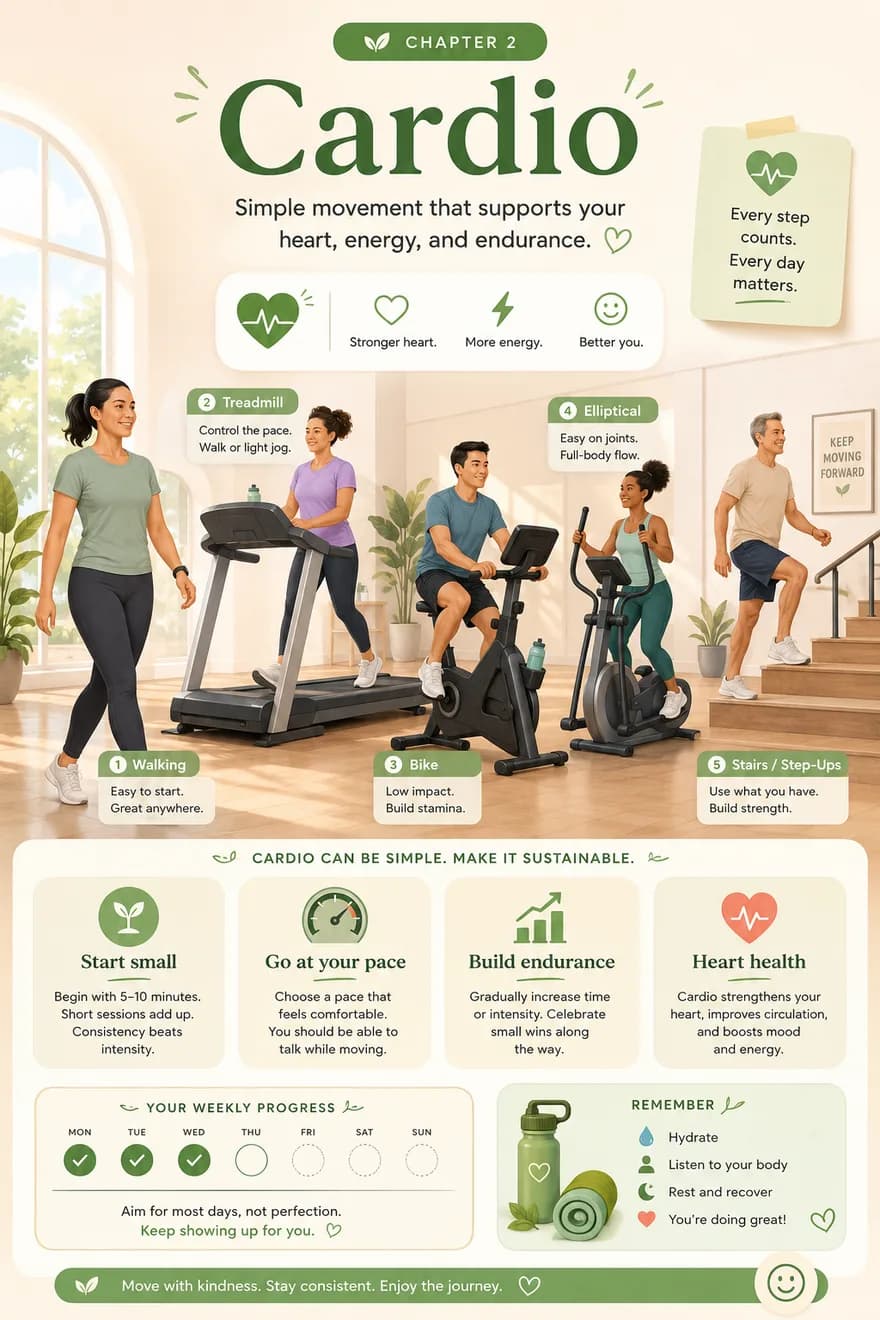
There are many ways to do cardio. You can choose: Walking Treadmill walking Cycling Swimming Elliptical Stairs Dancing Rowing machine Light jogging Hiking Low-impact home cardio You do not need the “best” option. You need the option that fits your body, schedule, joints, energy, and environment. For many beginners, walking is the best starting point because it is simple, low-impact, and easy to repeat. Walking counts. Treadmill counts. Slow cycling counts. Easy swimming counts. If it gets you moving and you can repeat it safely, it counts.
Low Intensity vs. High Intensity
Cardio can be low intensity, moderate intensity, or high intensity. Low-intensity cardio feels comfortable. You can usually talk while doing it. Walking is a common example. Moderate-intensity cardio feels more challenging. Your breathing is faster, but you can still speak in short sentences. High-intensity cardio feels very hard. Talking becomes difficult, and your body needs more recovery afterward. All types can be useful. But beginners do not need to start with high intensity. Low and moderate cardio are often better for building consistency, protecting joints, and avoiding burnout.
Beginners Do Not Need Extreme Cardio
Many people think cardio must be painful to work. That is not true. Extreme cardio can make beginners feel discouraged, sore, exhausted, or afraid to continue. It can also increase injury risk if the body is not ready. A better beginner goal is to finish cardio feeling like: “I could do this again.” Not: “I never want to do this again.” Your first cardio sessions should build confidence, not destroy you. Start easy. Build gradually. Let your body adapt.
Cardio Supports Heart Health and Endurance
Cardio is one of the best habits for heart and lung health. Regular cardio can help improve circulation, endurance, breathing capacity, and daily energy. Over time, things that used to feel difficult may become easier: Walking longer Climbing stairs Carrying groceries Standing more Training at the gym Moving without feeling out of breath so quickly This kind of progress matters. Cardio is not only about weight loss. It is about making your body more capable in daily life.
Cardio Can Help With Calorie Burn
Cardio can support weight loss because movement uses energy. But cardio should not be seen as punishment for eating. You do not need to “burn off” every meal. Food choices, portion control, protein, sleep, strength training, and consistency all matter too. Cardio is one helpful tool in the bigger plan. It can increase your daily activity, support a calorie deficit, improve fitness, and help you feel more connected to your health goals. But it works best when paired with realistic nutrition and consistent habits.
Choose a Sustainable Cardio Option
The best cardio is not always the hardest cardio. The best cardio is the one you can repeat safely. Ask yourself: Do my joints feel okay with this? Can I do this more than once per week? Does this fit my schedule? Can I recover from it? Do I feel better after doing it? Can I slowly improve over time? If running hurts your knees, walk or cycle. If the treadmill feels boring, try music or outdoor walking. If stairs are too hard, start with flat walking. If swimming feels good, use it. You are allowed to choose what works for your body.
Build Cardio Gradually
You do not need to jump from zero to one hour. Start with 10 to 20 minutes of easy cardio. When that feels manageable, you can slowly increase time, frequency, or intensity. Examples: Week 1: 10 minutes walking Week 2: 15 minutes walking Week 3: 20 minutes walking Week 4: 25 minutes walking or slightly faster pace Progress does not need to be dramatic. Small increases repeated over time can create a stronger heart, better endurance, and more confidence.
Common mistake
Thinking cardio only counts if it is intense. Many beginners ignore walking because it feels too simple. But walking is one of the most realistic and repeatable cardio habits. Easy cardio still supports your heart, endurance, calorie burn, mood, and consistency. Do not underestimate the power of movement you can actually repeat.
Practical tip
Use the “talk test.” During easy or moderate cardio, ask: “Can I still talk?” If you can talk comfortably, it is probably easy intensity. If you can talk in short sentences, it is probably moderate intensity. If you cannot talk, it is high intensity. For today, aim for easy cardio. You should finish feeling successful, not destroyed.
Today’s mission
Do 10 to 20 minutes of easy cardio today. Choose one: Walk outside Walk on a treadmill Cycle slowly Use the elliptical Swim easily Walk stairs gently Do low-impact home cardio Keep the pace comfortable. The goal is not maximum effort. The goal is to move, breathe, and build consistency.
Follow this as a guided journey
Create a free account to unlock daily quizzes, missions, streaks and a coach that adapts to your progress.
Start free →