
Day 9
Emotional Eating
Food is not only fuel. Food can feel like comfort, reward, distraction, celebration, and relief. That is why emotional eating is so common. If you have ever eaten because you were stressed, sad, bored, lonely, angry, or overwhelmed, you are not alone. This does not mean you failed. It means you are human. Today is not about judging emotional eating. It is about recognizing it earlier, understanding what is really happening, and giving yourself more ways to respond.
What Emotional Eating Means
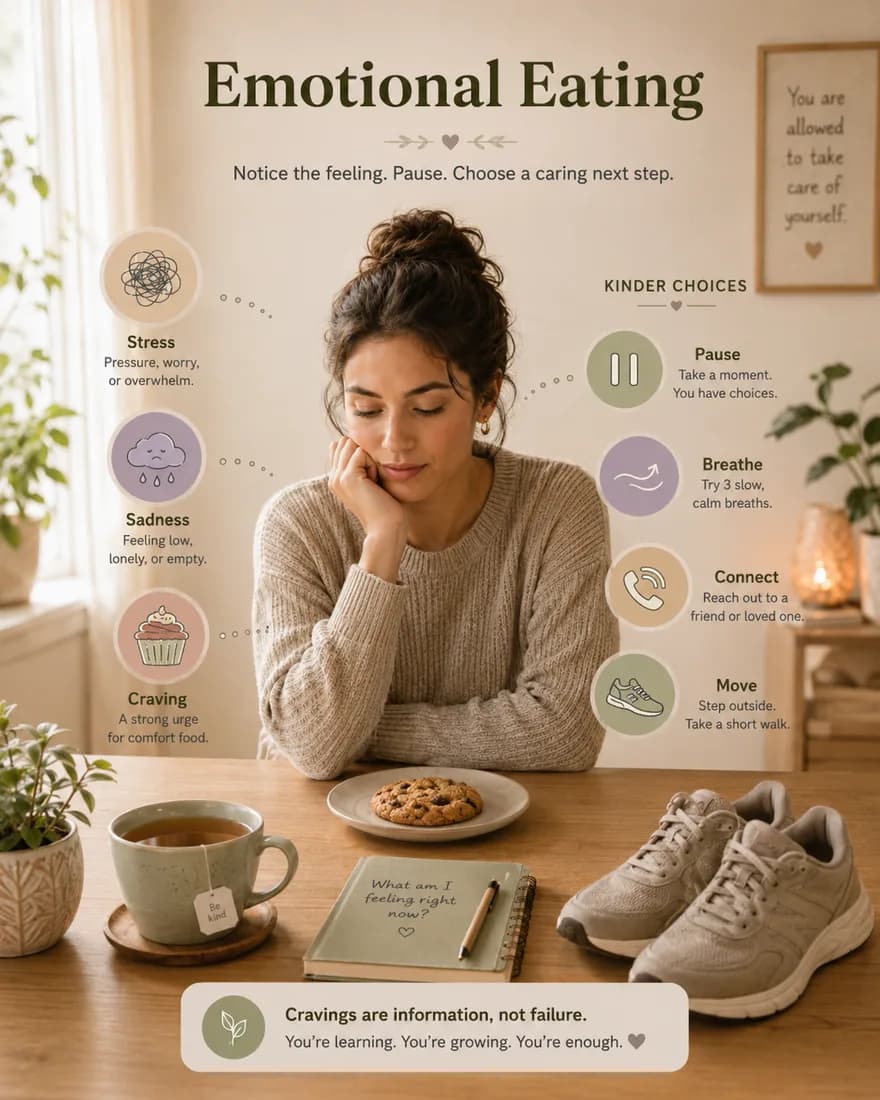
Emotional eating means eating in response to feelings instead of physical hunger. It can happen when you are stressed, tired, lonely, sad, angry, bored, anxious, or even excited. Sometimes emotional eating looks like eating a lot at once. Other times, it is small repeated snacks throughout the day. The important question is not: “Was this food good or bad?” The better question is: “What was I feeling when I wanted to eat?” That question helps you understand the real need behind the craving.
Common Emotional Eating Triggers
Emotional eating often follows a trigger. Common triggers include: Stress from work, money, family, or responsibilities. Sadness after disappointment or loneliness. Boredom when there is nothing interesting to do. Anger after conflict or frustration. Tiredness after a long day. Anxiety about the future. Feeling unappreciated or overwhelmed. These emotions can create discomfort, and the brain naturally looks for quick relief. Food becomes one fast option. Not because you are weak — because food is available, familiar, and often emotionally connected to comfort.
Why Food Feels Comforting
Food can comfort you in the short term. Sweet, salty, creamy, crunchy, or high-calorie foods can give quick pleasure and distraction. They can temporarily reduce emotional discomfort or give your brain a feeling of reward. That short-term comfort is real. The problem is what happens after. If food is the only tool you use for emotions, you may feel guilt, heaviness, loss of control, or frustration later. The original emotion may still be there too. Food can distract from a feeling, but it does not always solve the feeling. That is why you need more tools.
The Goal Is Not “Never Eat Emotionally”
The goal is not to become a robot. You will sometimes eat for comfort, celebration, pleasure, or connection. That is part of real life. The goal is to recognize emotional eating earlier. Instead of noticing only after overeating, you can learn to notice before or during the craving. That gives you a choice. You might still decide to eat. But you can do it with more awareness, a better portion, or after trying another coping action first. Progress means creating space between the emotion and the eating.
Use the 10-Minute Pause
When a craving appears, do not immediately fight it. Pause for 10 minutes. During that time, ask yourself: “What am I feeling right now?” “What happened before this craving?” “Am I physically hungry, or emotionally uncomfortable?” “What do I actually need?” A pause does not mean you are banning the food. It means you are giving yourself time to understand the craving before reacting automatically. Many cravings become weaker when you slow down. And even if you still eat, you have practiced awareness.
Alternative Coping Actions
If the craving is emotional, try one small coping action before eating. Examples: Take a short walk. Drink water or tea. Write one sentence about how you feel. Take 10 slow breaths. Message a friend. Stretch for two minutes. Step away from your screen. Listen to calming music. Take a shower. Clean one small area. Go outside for fresh air. Prepare a balanced snack instead of random eating. The goal is not to replace food with a perfect habit every time. The goal is to teach your brain that food is not the only way to feel better.
Log Your Mood Before or After Eating
Mood logging is a simple way to find patterns. Before or after an eating moment, write down: What did I eat? What was I feeling? How hungry was I from 1 to 10? What happened before I wanted to eat? How did I feel afterward? You do not need long notes. Even one word can help: Stressed. Bored. Lonely. Angry. Tired. Sad. Anxious. Calm. Hungry. Over time, these small logs reveal your patterns. When you see the pattern, you can change the plan.
Awareness Builds Control
You cannot control every emotion. But you can learn how you usually respond to emotions. That is where control begins. If you know you snack when stressed, you can prepare a stress plan. If you know you eat when bored, you can plan evening activities. If you know loneliness leads to cravings, you can build connection into your day. If you know tiredness leads to overeating, you can simplify dinner and protect sleep. Emotional eating becomes easier to manage when it is no longer invisible. Awareness is not punishment. Awareness is power.
Common mistake
Trying to handle emotional eating with strict food rules only. Rules like “I will never eat sweets again” may sound strong, but they often fail if the real trigger is stress, sadness, loneliness, boredom, or anger. You need to address the emotion, not only the food.
Practical tip
Create a simple “before food” list. Write down three things you can try before eating emotionally. Example: 1. Drink water and wait 10 minutes. 2. Write one sentence about what I feel. 3. Take a short walk or stretch. Keep the list easy. When emotions are strong, simple actions work better than complicated plans.
Today’s mission
If a craving appears today, wait 10 minutes and record the emotion behind it. Use this sentence: “I want to eat right now because I feel…” Do not judge the answer. Just notice it. After 10 minutes, make the next honest choice.
Follow this as a guided journey
Create a free account to unlock daily quizzes, missions, streaks and a coach that adapts to your progress.
Start free →