
Day 6
Understanding Healthy Fats
Fat is often misunderstood. Some people think eating fat automatically makes them gain fat. Others believe they must avoid oil, nuts, eggs, fish, or avocado to lose weight. But fat is not automatically bad. Your body needs some fat to function well. The real skill is learning which fats support your health, which fats to limit, and how much is enough. Today, you will learn how to use fats wisely — without fear, confusion, or extreme rules.
Fats Are Not the Enemy
Fats are an important part of a balanced diet. Your body uses fats for hormones, brain function, vitamin absorption, cell health, and long-lasting satisfaction from meals. A meal with a small amount of healthy fat can feel more complete and enjoyable. The goal is not to remove all fat. The goal is to choose better fats more often and control portions. Fat can support your journey when it is used wisely.
Healthy Fats Help With Satisfaction
Healthy fats can make meals more satisfying. They add flavor, texture, and fullness. This can help you feel less restricted and make healthy eating easier to repeat. For example: A little olive oil on salad can make vegetables more enjoyable. A few nuts with yogurt or fruit can make a snack more satisfying. Avocado can add creaminess to a meal. Fatty fish can provide protein and healthy fats together. When meals are too dry, plain, or strict, people often quit. A small amount of healthy fat can help your meals feel realistic.
Simple Healthy Fat Sources
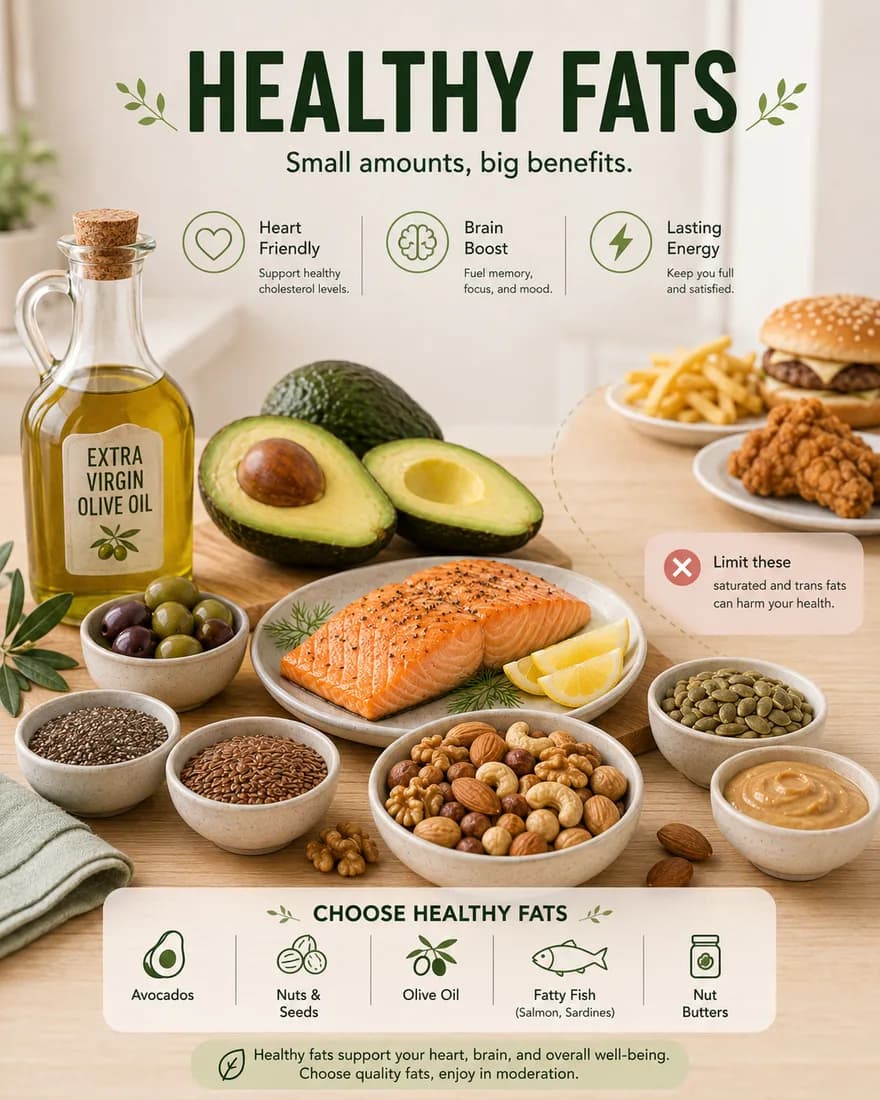
Healthy fats do not need to be complicated. Good options include: Olive oil Avocado Nuts Seeds Tahini Olives Peanut butter or nut butter Fatty fish like salmon, sardines, trout, or mackerel Eggs Some dairy foods in reasonable amounts You do not need all of these every day. Choose the ones that fit your taste, culture, budget, and meals. The best healthy fat is one you can use in a simple and controlled way.
Portions Matter
Fat is useful, but it is also calorie-dense. This means a small amount contains a lot of energy. For example, a little oil can support a meal. But too much oil can quickly add many extra calories without making the plate look much bigger. The same is true for nuts, seeds, cheese, butter, cream, sauces, and nut butters. This does not mean you should fear these foods. It means you should be aware. Healthy fat is still food energy. For weight loss, the goal is not “as much healthy fat as possible.” The goal is the right amount.
Limit Deep-Fried and Greasy Foods
Deep-fried foods are often very high in calories because they absorb a lot of oil. They can also be easy to overeat, especially when combined with salt, sauces, bread, or sugary drinks. Examples to limit include: French fries Fried chicken Fried snacks Chips Doughnuts Fast-food fried items Greasy restaurant meals You do not need to say “never.” But if fried foods appear too often, they can slow your progress and make weight loss harder. A lighter option most of the time is a smarter choice.
Be Careful With Trans Fats and Too Much Saturated Fat
Some fats are better to limit for heart health and overall health. Trans fats are often found in some processed foods, baked goods, packaged snacks, and fried fast foods. These should be avoided as much as possible. Saturated fats are found in foods like butter, cream, fatty cuts of meat, processed meats, some cheeses, and many rich desserts. You do not always need to remove them completely, but too much can be a problem. A practical approach is simple: Use olive oil more often than butter. Choose grilled or baked foods more often than fried foods. Choose leaner proteins more often than fatty processed meats. Keep creamy sauces and heavy desserts occasional instead of daily. Small swaps can protect your health without making life miserable.
How to Use Fats Wisely in Daily Meals
You can include fat in your meals without letting it take over. Use a small amount of oil for cooking. Add a few nuts or seeds instead of a large handful. Choose avocado as a small side, not the whole meal. Use sauces lightly. Choose grilled, baked, boiled, or air-fried foods more often. Pair fats with protein, vegetables, and better carbohydrates. A balanced plate may include fat, but it should not be dominated by oil, fried foods, creamy sauces, or large fatty portions. Think of fat as a support ingredient. It improves the meal, but it should not quietly become the whole meal.
Common mistake
Thinking “healthy fat” means unlimited fat. Olive oil, nuts, avocado, and seeds can be healthy choices, but large portions can still add a lot of calories. Healthy does not always mean unlimited. Use these foods with respect, not fear.
Practical tip
Use the “small add-on” rule. When adding fat to a meal, choose one small source. For example: A little olive oil on salad. A small handful of nuts. A few slices of avocado. A spoon of seeds. A small amount of tahini or sauce. One small fat source can make the meal satisfying without making it too heavy.
Today’s mission
Replace one fried or greasy food choice with a lighter option today. Examples: Choose grilled chicken instead of fried chicken. Choose baked or boiled potatoes instead of fries. Choose yogurt-based sauce instead of creamy sauce. Choose air-fried food instead of deep-fried food. Choose a simple sandwich instead of a greasy fast-food meal. Choose fruit and yogurt instead of a fried dessert. One lighter choice is enough for today.
Follow this as a guided journey
Create a free account to unlock daily quizzes, missions, streaks and a coach that adapts to your progress.
Start free →