
Day 13
Understanding Food Labels
Packaged foods can be confusing. One product says “healthy.” Another says “fit.” Another says “natural,” “light,” “high protein,” or “no added sugar.” But the front of the package is often designed to sell the food, not explain it clearly. A food label helps you look past the marketing and understand what you are really eating. Today, you will learn how to read food labels in a simple way so you can make better choices without becoming obsessed.
Start With Serving Size
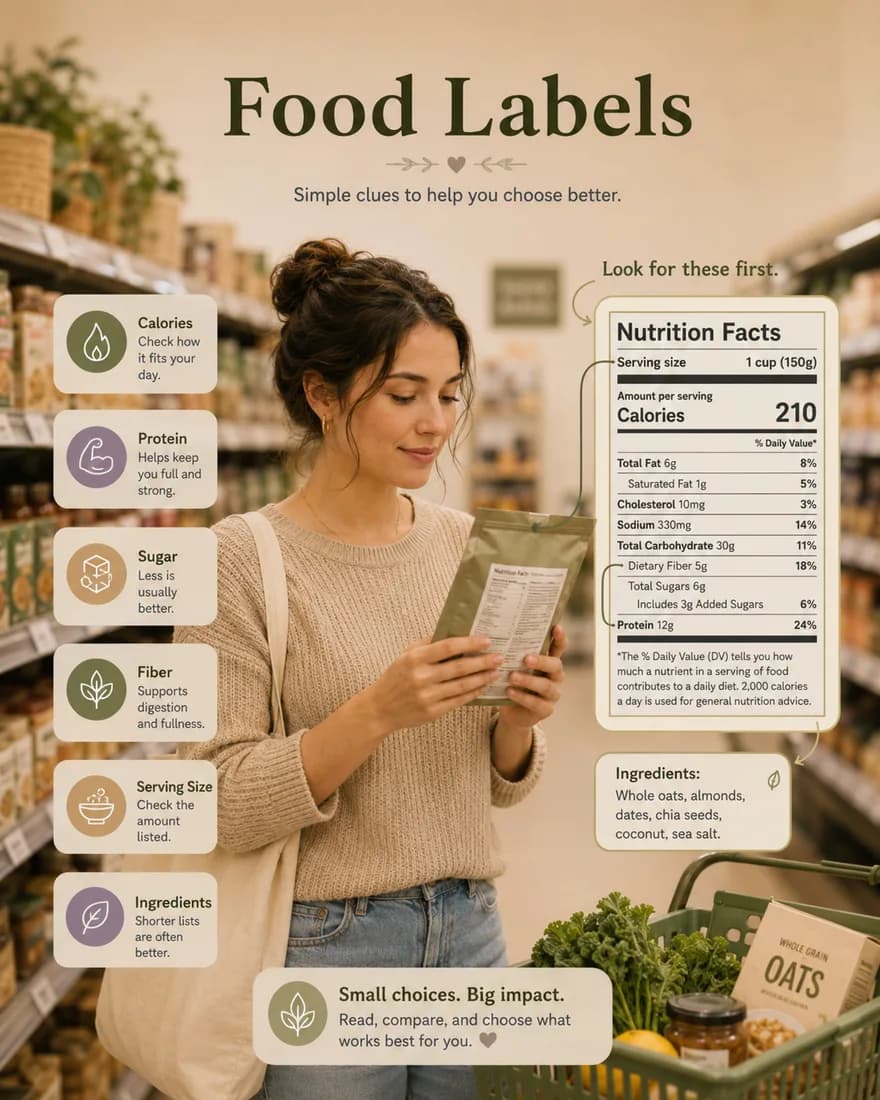
The serving size tells you what amount of food the nutrition information is based on. This is important because the package may contain more than one serving. For example, a snack may look like one small package, but the label may count it as two servings. If you eat the whole package, you may need to double the calories, sugar, fat, and other numbers. Before looking at anything else, ask: “Is this label for the whole package or only one serving?” This one question can prevent a lot of confusion.
Check the Calories
Calories show how much energy the food gives your body. Calories are not bad. Your body needs energy to live, move, think, work, and train. But if your goal is weight loss, calories still matter. You do not need to fear the number. Just use it as information. Ask: “Is this amount reasonable for the portion?” “Will this food keep me full?” “Is it worth it for my goal today?” A food can be low-calorie and not very filling. A food can also be higher-calorie but still useful if it has protein, fiber, and good nutrition. The label helps you decide with awareness.
Look for Protein
Protein is helpful for fullness, muscle support, and recovery. When choosing packaged foods like yogurt, milk, protein bars, ready meals, sandwiches, cereals, or snacks, checking protein can help you find options that keep you satisfied longer. A product with more protein is not automatically perfect, but it can be a better choice than a similar product with very little protein and lots of sugar or fat. Ask: “Does this food give me meaningful protein, or is it mostly calories without much fullness?” Protein is one piece of the decision, not the whole decision.
Pay Attention to Sugar
Sugar can add up quickly in packaged foods and drinks. It is often found in soda, juice, sweet coffee drinks, flavored yogurt, cereal, biscuits, sauces, desserts, protein bars, and many “healthy-looking” snacks. Sugar is not something you must fear forever, but high-sugar foods can be easy to overeat and may not keep you full for long. Look at the sugar amount and ask: “Is this an everyday choice or an occasional treat?” “Is there a lower-sugar option?” “Does this food also contain protein or fiber?” The goal is not panic. The goal is awareness.
Fiber Helps Fullness and Digestion
Fiber is important for digestion, gut health, fullness, and steady energy. Foods with more fiber usually help you feel satisfied for longer. Fiber is often found in foods like oats, beans, lentils, whole grains, fruits, vegetables, seeds, and some higher-fiber packaged products. When comparing two similar foods, the one with more fiber may be the better choice. For example: A higher-fiber bread may be better than plain white bread. Oats may be better than sugary cereal. A snack with fiber and protein may be more satisfying than a sweet snack with mostly sugar. Fiber is a quiet but powerful helper.
Understand Fat on the Label
Fat is not automatically bad. Healthy fats can support hormones, satisfaction, and meal enjoyment. But fat is calorie-dense, so portions matter. When reading a label, look at the total fat and also notice the type of food. Some foods naturally contain fat, like nuts, seeds, eggs, dairy, avocado, and fatty fish. These can fit into a balanced diet. But foods high in deep-fried oils, creamy sauces, pastries, chips, and processed snacks may add a lot of calories without much fullness. If the product is high in saturated fat, it is usually better to keep it moderate rather than make it a daily main choice. The question is: “Does this fat come with useful nutrition, or is it mostly making the food heavier?”
Read the Ingredients List
The ingredients list shows what the product is made from. Ingredients are usually listed from the largest amount to the smallest amount. If sugar, syrup, refined flour, hydrogenated oil, or many additives appear near the beginning, that tells you something important. This does not mean every long ingredient list is dangerous. But it can help you understand whether the product is close to real food or mostly a highly processed snack. A simple rule: The first few ingredients matter most. If they look like foods you recognize, that is usually a better sign.
Marketing Words Are Not Enough
Words like “healthy,” “fit,” “natural,” “light,” “low-fat,” “high-protein,” “organic,” or “no added sugar” do not automatically mean the product is the best choice. A “fit” snack may still be high in calories. A “natural” drink may still contain a lot of sugar. A “low-fat” product may have extra sugar. A “high-protein” product may still be high in calories and low in fiber. Do not let the front of the package make the decision for you. Turn the package around. Read the label. Then decide. That is real control.
Common mistake
Only trusting the front of the package. Many people choose foods because the package looks healthy, not because the nutrition supports their goals. Marketing is designed to catch your attention. The label gives you better information. A smart choice starts by checking the serving size, calories, protein, sugar, fiber, fat, and ingredients.
Practical tip
Use the “compare two” method. When you are in a store, compare two similar products. For example, compare two yogurts, two breads, two cereals, two snacks, or two ready meals. Choose the one that gives you a better balance of: Reasonable calories More protein Less added sugar More fiber Better ingredients Less unnecessary fat You do not need the perfect product. Just choose the better one.
Today’s mission
Read the nutrition label of one packaged food today. Check: Serving size Calories Protein Sugar Fiber Fat Ingredients list Do not judge yourself for eating it. Just learn what is inside. Awareness makes future choices easier.
Follow this as a guided journey
Create a free account to unlock daily quizzes, missions, streaks and a coach that adapts to your progress.
Start free →