
Day 12
Portion Control Without Obsession
You do not need to weigh every bite of food to make progress. Portion control is not about fear, punishment, or eating tiny meals. It is about learning how much food supports your body, your energy, and your goals. Sometimes the difference between staying stuck and moving forward is not changing every food — it is simply adjusting the amount. Today, you will learn how to control portions in a calm, realistic way without becoming obsessed.
Why Portion Size Matters
Food quality matters, but food quantity matters too. Even healthy meals can slow progress if the portions are much larger than your body needs. A balanced plate can help with energy, fullness, and nutrition. But if the plate is overloaded every time, weight loss can become harder. Portion control helps you create a better balance between what your body receives and what your body uses. The goal is not to eat as little as possible. The goal is to eat enough — but not far beyond enough.
Healthy Food Can Still Become Too Much
Some people think healthy foods do not need portion control. But foods like nuts, olive oil, avocado, rice, pasta, bread, cheese, dried fruit, peanut butter, and even healthy homemade meals can still add up. This does not mean these foods are bad. It means “healthy” does not always mean “unlimited.” A large amount of a healthy food can still be more energy than your body needs. Awareness is the skill. You can enjoy healthy foods while still respecting portions.
Use Smaller Plates
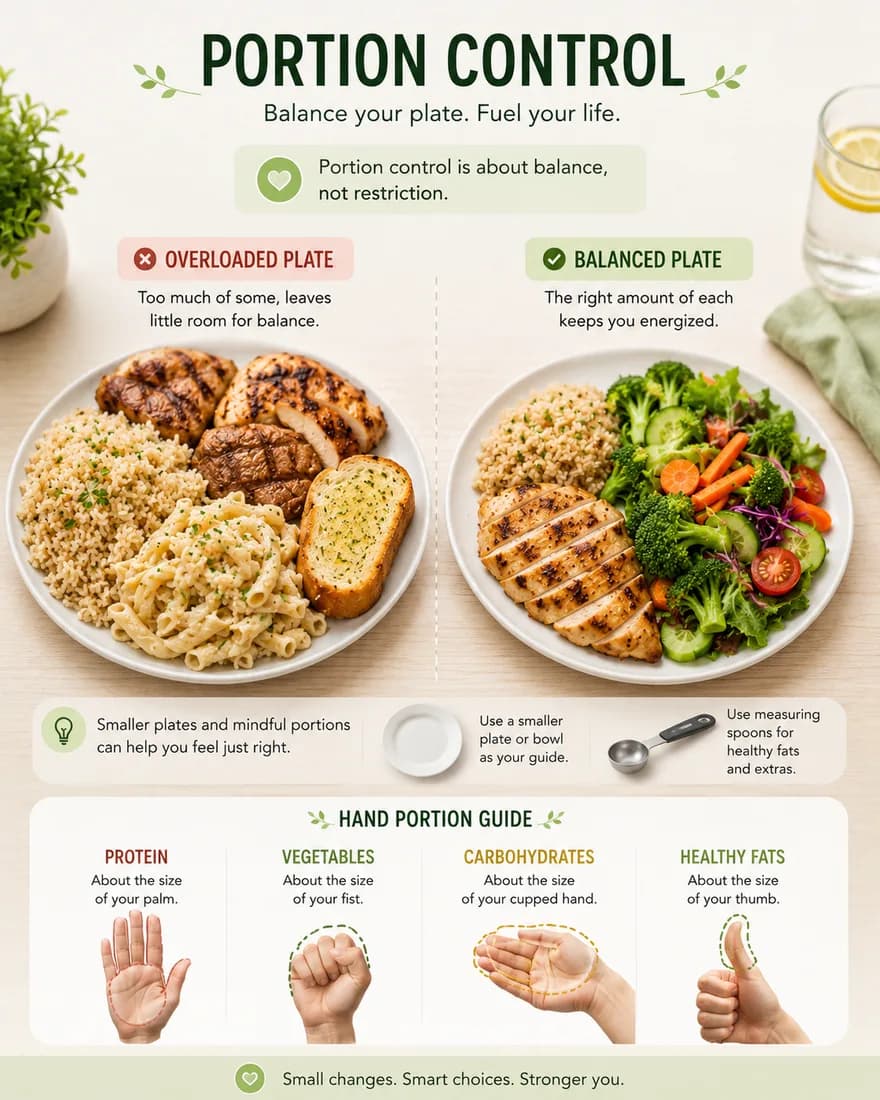
One simple way to reduce portions is to change the plate. A very large plate can make a normal portion look small. This may push you to add more food without realizing it. A smaller plate can make a reasonable portion look more satisfying. This does not trick your body completely, but it can help your brain feel less deprived while you practice eating slightly less. You can also use smaller bowls for cereal, rice, pasta, snacks, or desserts. Small environment changes can make better choices easier.
Hand-Based Portion Estimates
You do not always need a food scale. Your hand can be a simple guide because it roughly matches your body size. A beginner-friendly method: Protein: one palm-sized portion Carbohydrates: one fist-sized portion Vegetables or fruit: one to two fists Fats: one thumb-sized portion Examples: Chicken about the size of your palm. Rice or potatoes about the size of your fist. Vegetables filling one to two fists. Olive oil, peanut butter, or nuts in a smaller thumb-sized amount. This is not perfect math, and it does not need to be. It gives you a realistic starting point.
Reduce Portions Gradually
You do not need to cut your meals in half overnight. Extreme changes can make you hungry, frustrated, and more likely to overeat later. A better method is gradual reduction. For example: Use a little less rice than usual. Pour a smaller bowl of cereal. Use one spoon less oil. Eat one slice of bread instead of two. Serve snacks in a bowl instead of eating from the package. Leave a few bites when you are already satisfied. Small reductions are easier to repeat. And repeated small changes can create big progress over time.
Eat Enough to Stay Satisfied
Portion control should not leave you starving. If your meals are too small, your body may push back with cravings, low energy, irritability, and overeating later. A good portion-controlled meal should still include: Protein Vegetables or fruit A reasonable carbohydrate portion A small amount of healthy fat Enough volume to feel satisfied Do not confuse control with punishment. You are not trying to suffer through the day. You are trying to build meals that support weight loss and still feel livable.
Avoid Extreme Restriction
Extreme restriction often creates a cycle: Eat very little. Feel hungry and tired. Crave strongly. Overeat. Feel guilty. Try to restrict again. This cycle is exhausting. Portion control is different. Restriction says: “I must eat as little as possible.” Portion control says: “I will eat enough, but I will be more aware of how much.” That mindset matters. You are learning control, not fear.
Let Fullness Guide You
Portions are not only about what is on the plate. They are also about how your body feels. During a meal, pause and ask: “Am I still hungry?” “Am I satisfied?” “Am I continuing because the food is there?” “Would stopping now feel okay?” Try to stop when you feel satisfied, not stuffed. At first, this may feel difficult. That is normal. Many people are used to finishing everything automatically. With practice, your body’s signals become easier to hear.
Common mistake
Making portions too small and calling it discipline. Eating too little may work for a day or two, but it often leads to stronger hunger, cravings, and overeating later. Good portion control should feel realistic enough to repeat. The best portion is not the smallest portion. It is the portion that supports progress and consistency.
Practical tip
Use the “serve once” rule. Put your food on a plate or in a bowl before eating. Avoid eating directly from the pot, bag, box, or container. If you want more, pause for a few minutes first and check your hunger. This helps you turn eating into a choice instead of an automatic refill.
Today’s mission
Make one usual portion about 20 percent smaller today or use a smaller plate. Examples: Use a smaller plate for lunch. Reduce your rice or pasta portion slightly. Use less oil or sauce. Serve a smaller snack portion in a bowl. Choose one slice of bread instead of two. Stop eating when satisfied instead of overly full. Do not make the meal tiny. Just make one portion a little more controlled than usual.
Follow this as a guided journey
Create a free account to unlock daily quizzes, missions, streaks and a coach that adapts to your progress.
Start free →