
Day 14
Food Journaling Without Obsession
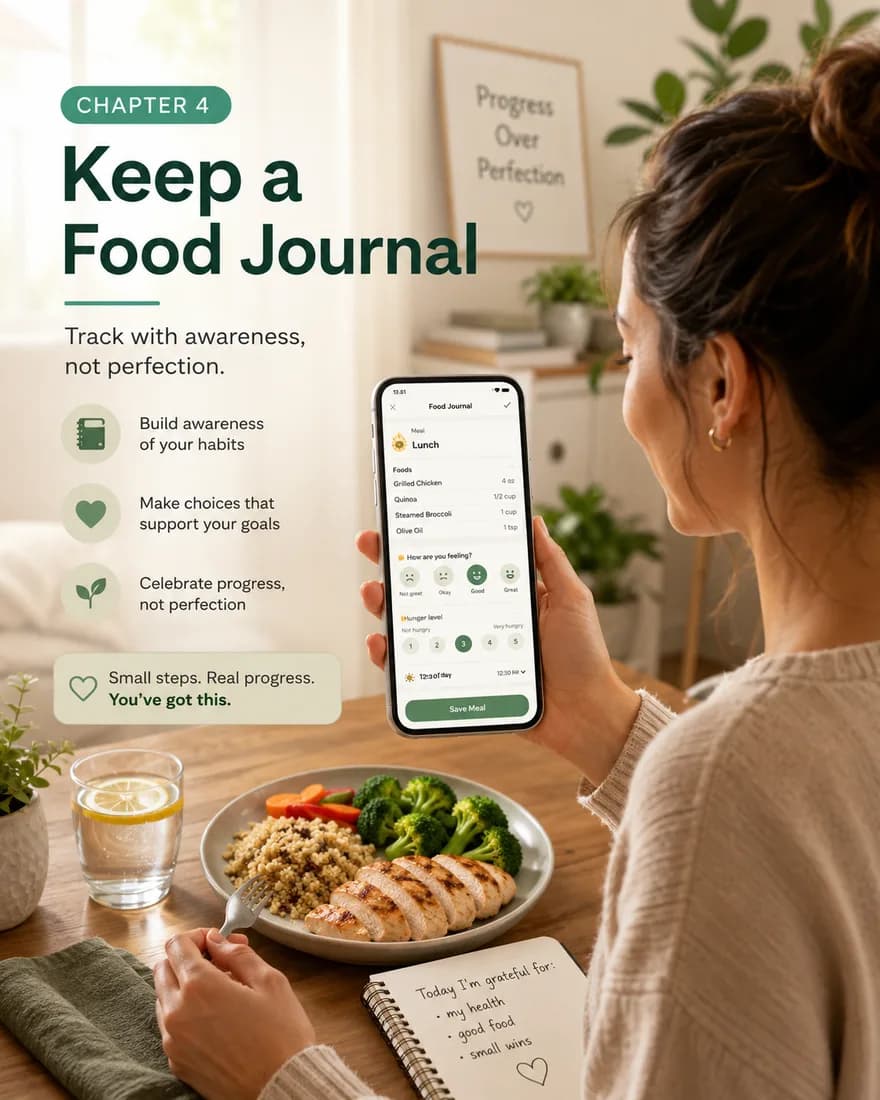
You cannot improve what you cannot see clearly. Many people eat more, snack more, drink more calories, or eat emotionally without fully noticing it. Not because they are careless — because daily life is busy, automatic, and stressful. Food journaling is not about judging yourself. It is not about proving you were “good” or “bad.” It is simply a way to understand your habits better. Today, you will learn how to log food honestly, calmly, and usefully — without becoming obsessive.
Why Logging Food Helps Awareness
Food logging helps you see what actually happens during the day. Memory is not always accurate. You may remember your main meals but forget small snacks, drinks, sauces, bites, or late-night eating. When you log food, you create a clearer picture. You may notice: You skip breakfast and overeat later. You snack more when stressed. You drink more calories than expected. You eat differently at work than at home. You feel hungrier when meals lack protein. You eat faster when distracted. Logging is not punishment. It is information. And information helps you make better choices.
What You Can Log
Food journaling does not need to be complicated. You can log more than just meals. Useful things to track include: Meals Snacks Drinks Portion size Mood Hunger level Cravings Location Time of eating Who you were with Whether you were distracted How you felt after eating You do not need to track all of these forever. But adding some context helps you understand why you eat, not just what you eat. That is where real behavior change begins.
Imperfect Logging Is Still Useful
Many people quit logging because they cannot do it perfectly. They think: “I do not know the exact calories.” “I do not know the weight of this food.” “I forgot one snack.” “I already messed up today.” But imperfect logging is still useful. Writing “rice, chicken, salad, medium portion” is better than writing nothing. Writing “sweet coffee” is better than pretending it did not happen. Writing “snacked while stressed” is more useful than only recording calories. You are not trying to create a perfect scientific report. You are trying to become more aware.
Do Not Feel Guilty Logging “Bad” Foods
There are no entries you need to hide from your journal. If you ate chocolate, log it. If you drank soda, log it. If you had fast food, log it. If you overate at night, log it. If you ate because you were stressed, log it. The log is not there to shame you. It is there to help you understand the pattern. A “bad” food entry can teach you something important: Was I hungry? Was I tired? Was I emotional? Did I skip meals earlier? Was the portion too large? Did I eat from habit? Honesty creates progress. Hiding keeps the pattern invisible.
Look for Patterns After Several Days
One day of logging may not tell the full story. Patterns usually appear after several days. After 3 to 7 days, look back and ask: When do I feel most hungry? Which meals keep me full? When do cravings appear? Do I snack more at night? Do I drink calories often? Do I eat differently when stressed? Do I miss protein or vegetables often? Do weekends look different from weekdays? You are not looking for reasons to blame yourself. You are looking for clues. A pattern gives you a place to start.
Track Habits, Not Just Food
Food matters, but habits around food matter too. You can track simple behaviors like: Drinking water Eating protein Eating vegetables Walking Sleeping enough Eating slowly Pausing before cravings Planning meals Avoiding distracted eating Habit tracking helps you focus on actions, not just outcomes. This is important because your weight may change slowly, but your habits can improve today. When you see habit progress, you build confidence.
How AI Can Help Later
When you log consistently, Lonero can help you understand your patterns more clearly. AI can look across your logs and help identify things like: Common craving times Low-protein meals High-calorie drink habits Stress-eating patterns Skipped meals Low-fiber days Weekend overeating Meals that keep you full Habits connected to better progress The value of AI depends on honest input. You do not need perfect data. But the more honest your logging is, the more useful the feedback can become. Think of your log as a conversation with your future coach.
Keep Logging Calm and Simple
Food journaling should support your life, not control it. If logging makes you anxious, simplify it. You can log with photos. You can write short notes. You can estimate portions. You can track only meals and drinks. You can add mood with one word. You can track habits with checkmarks. The goal is awareness, not obsession. A useful log is one you can actually continue.
Common mistake
Using food logging as a guilt diary. Some people only log when they eat “perfectly” and avoid logging when they feel embarrassed. That removes the most useful information. Your log should be honest, not polished. The goal is not to prove you had a perfect day. The goal is to understand your real day.
Practical tip
Use short, simple entries. Instead of trying to write everything perfectly, use this format: Meal: What I ate Portion: Small, medium, or large Mood: One word Hunger: 1 to 10 Location: Home, work, restaurant, car, or other Example: Meal: Chicken, rice, salad Portion: Medium Mood: Calm Hunger: 7 Location: Home Simple logging is easier to repeat.
Today’s mission
Log everything you eat and drink today as honestly as possible, even if it is not perfectly measured. Include: Meals Snacks Drinks Sauces or extras if you remember Mood before or after eating Hunger level if possible Do not judge the log. Do not try to make the day look better. Just record the truth. Awareness is progress.
Follow this as a guided journey
Create a free account to unlock daily quizzes, missions, streaks and a coach that adapts to your progress.
Start free →