
Day 3
Build a Balanced Healthy Plate
Healthy eating does not need to be complicated. You do not need to count every calorie, follow strict rules, or eat the same boring meal every day to make progress. A better meal starts with a simple structure. The healthy plate method helps you look at your meal and quickly understand if it supports your body, your energy, and your goals. Today, you will learn how to build a balanced plate that works in real life — at home, at work, with family meals, or even at a restaurant.
The Healthy Plate Method
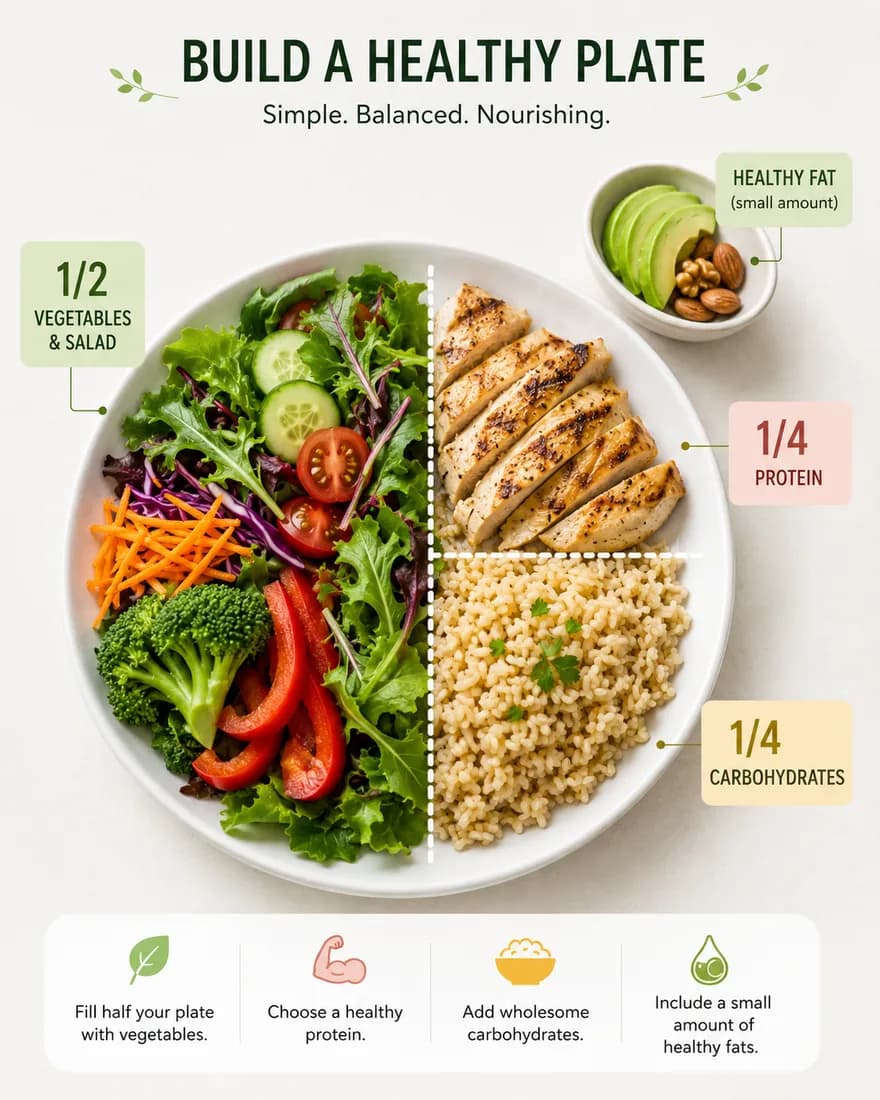
The healthy plate method is a simple way to build better meals without overthinking. Imagine your plate divided into four parts: Half of the plate: vegetables or fruits One quarter: protein One quarter: better carbohydrates A small amount: healthy fat This method gives your body the main things it needs: vitamins, minerals, fiber, protein, energy, and satisfaction. It is not a strict rule. It is a guide. Your plate does not need to look perfect every time. It just needs to move you in a better direction.
Half Plate: Vegetables or Fruits
Start by filling about half of your plate with vegetables, fruits, or a mix of both. Vegetables are especially helpful because they add volume, fiber, water, and nutrients with fewer calories. Good options include: Cucumber, tomato, lettuce, spinach, broccoli, carrots, peppers, mushrooms, cabbage, zucchini, eggplant, green beans, or salad. Fruits can also be part of a healthy plate, especially for breakfast or lighter meals. Good options include: Apple, berries, orange, banana, melon, kiwi, peach, or grapes. This part of the plate helps you feel fuller and gives your body important nutrients.
One Quarter: Protein
Protein should take about one quarter of your plate. Protein helps with fullness, muscle support, recovery, and better body composition during weight loss. Good protein options include: Eggs, chicken, turkey, fish, lean meat, Greek yogurt, cottage cheese, beans, lentils, tofu, or protein-rich dairy. You do not need a huge amount at every meal, but having a clear protein source makes the meal stronger. A meal without protein often leaves you hungry again too soon.
One Quarter: Better Carbohydrates
Carbohydrates are not the enemy. Your body uses carbohydrates for energy, movement, training, focus, and daily activity. The goal is not to remove carbs completely. The goal is to choose better portions and better sources most of the time. Good carbohydrate options include: Rice, potatoes, sweet potatoes, oats, whole-grain bread, whole-wheat pasta, beans, lentils, barley, quinoa, corn, or fruit. The key is portion control. One quarter of the plate gives you energy without letting carbs take over the whole meal.
Add a Small Amount of Healthy Fat
Fat is important for hormones, brain health, taste, and satisfaction. But fat is also very energy-dense, so a small amount is usually enough. Healthy fat options include: Olive oil, avocado, nuts, seeds, tahini, peanut butter, olives, or fatty fish. This does not mean you need to add fat to every meal. Many meals already contain some fat from cooking oil, meat, eggs, dairy, or sauces. The goal is balance, not fear.
Why This Method Helps With Fullness
The healthy plate method works because it combines different types of fullness. Vegetables and fruits add volume and fiber. Protein helps you stay satisfied longer. Carbohydrates give energy. Healthy fats add taste and satisfaction. Together, these parts create a meal that feels complete. This is important because a meal that is too small, too strict, or missing key nutrients often leads to cravings later. A balanced meal helps you eat better without feeling punished.
How to Use It With Real Home Food
You do not need special “fitness food” to use this method. You can adapt normal meals. If you eat rice and chicken, add a large salad or cooked vegetables. Keep rice to about one quarter of the plate and chicken to about one quarter. If you eat eggs for breakfast, add tomatoes, cucumber, greens, or fruit. Add a small portion of bread or oats if needed. If you eat stew, soup, pasta, or mixed dishes, use the same idea mentally: Where is my protein? Where are my vegetables or fruit? Where is my carbohydrate? Is there too much added fat? You are not trying to make every meal perfect. You are learning to see balance.
How to Use It at Restaurants
Restaurant meals are often larger, saltier, oilier, and heavier than home meals. That does not mean you cannot make a good choice. Use the plate method as a filter. Choose a meal with a clear protein source. Add salad or vegetables when possible. Choose grilled, baked, or roasted options more often than fried options. Keep sauces, creamy dressings, and extra oils smaller. Share large portions or save part of the meal for later. You can still enjoy restaurant food. Just make the meal more balanced instead of turning it into an all-or-nothing decision.
Common mistake
Eating only “diet food” and removing too much from the meal. A plate with only salad may look healthy, but if it has no protein, no satisfying carbohydrate, and no healthy fat, you may become hungry again quickly. Healthy eating is not about eating as little as possible. It is about building meals that support your body and help you stay consistent.
Practical tip
Before eating, pause for 10 seconds and ask: “What is missing from this plate?” Maybe you need more vegetables. Maybe you need protein. Maybe the carb portion is too large. Maybe there is already enough fat from oil or sauce. This quick check helps you improve the meal without counting every calorie.
Today’s mission
Build one meal today using the healthy plate method. Try to include: Half plate vegetables or fruits One quarter protein One quarter better carbohydrates A small amount of healthy fat Do not worry if it is not perfect. The goal is to practice seeing balance.
Follow this as a guided journey
Create a free account to unlock daily quizzes, missions, streaks and a coach that adapts to your progress.
Start free →