
Day 4
Why Protein Matters
You do not need a perfect diet to start improving your health. But there is one habit that can make your meals stronger, more satisfying, and easier to repeat: adding enough protein. Protein is not only for bodybuilders. It is important for anyone who wants to lose weight, feel fuller, support muscle, exercise better, and build a healthier body. Today, you will learn how protein helps your progress — without making food complicated.
Protein Helps You Feel Fuller
One of the hardest parts of weight loss is hunger. If your meals are too small or mostly made of fast-digesting foods, you may feel hungry again quickly. That can lead to extra snacking, cravings, or overeating later in the day. Protein helps because it makes meals more satisfying. A meal with eggs, chicken, fish, meat, yogurt, beans, lentils, tofu, or cottage cheese usually keeps you fuller than a meal made mostly of bread, rice, sweets, or snacks. Feeling full does not mean feeling heavy. It means your meal supports you enough to continue your day calmly.
Protein Supports Muscle During Weight Loss
When you lose weight, the goal is not just to become lighter. The better goal is to lose fat while keeping as much muscle as possible. Muscle matters because it supports strength, posture, movement, metabolism, and body shape. If you lose weight too fast or eat too little protein, your body may lose more muscle than needed. Protein gives your body the building blocks it needs to maintain and repair muscle. This is especially important during weight loss because your body is already receiving less energy than usual. You are not only trying to shrink. You are trying to become healthier, stronger, and more capable.
Protein Is Useful If You Exercise
Exercise sends a signal to your body: “Keep this muscle.” “Build strength.” “Adapt and improve.” Protein helps your body respond to that signal. If you walk, lift weights, train at home, go to the gym, or do any regular movement, protein becomes even more helpful. It supports recovery after training and helps your muscles repair from the work you do. You do not need to eat like an athlete. But if you exercise, having protein in your meals makes your training more effective.
Simple Protein Sources
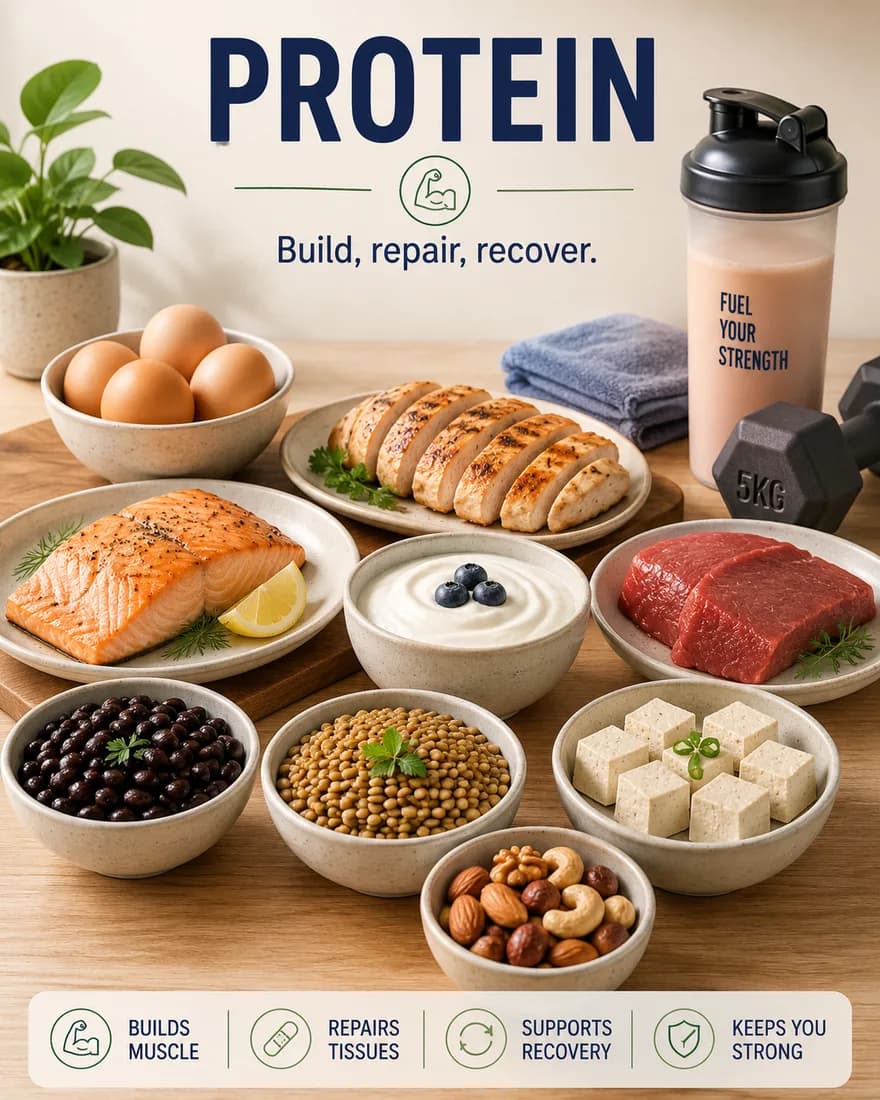
Protein does not need to be fancy or expensive. Good protein sources include: Eggs Chicken Turkey Fish Lean beef or lamb Greek yogurt Cottage cheese Milk Cheese in moderate amounts Beans Lentils Chickpeas Tofu Tempeh Protein powder when useful Animal proteins are often easy to use because they are rich in protein. Plant proteins can also work well, especially when you include enough quantity and variety. The best protein source is one you enjoy, can afford, can prepare, and can repeat.
How to Add Protein to Breakfast
Many breakfasts are mostly carbohydrates or drinks: bread, cereal, pastry, juice, coffee, or sweet snacks. These can give quick energy, but they may not keep you full for long. To make breakfast stronger, add a clear protein source. Examples: Eggs with tomato and cucumber Greek yogurt with fruit Cottage cheese with bread and vegetables Milk with oats and nuts Tuna or chicken sandwich Protein smoothie when you are busy Breakfast does not need to be large. It just needs to support your morning better than an empty or low-protein meal.
How to Add Protein to Lunch and Dinner
Lunch and dinner are usually easier places to add protein. Start by asking: “What is the main protein in this meal?” Examples: Chicken with rice and salad Fish with potatoes and vegetables Lean meat with cooked vegetables Eggs with bread and salad Lentil soup with yogurt Beans with rice and vegetables Tofu with noodles and stir-fried vegetables The meal does not need to be perfect. Just make sure protein is clearly present, not just a tiny side detail. A strong plate usually has protein, vegetables or fruit, better carbohydrates, and a small amount of healthy fat.
How to Add Protein to Snacks
Snacks can either help your day or quietly add extra calories without much fullness. A protein-based snack is usually more satisfying than a snack made only of sugar or refined carbs. Good snack options include: Greek yogurt Boiled eggs Cottage cheese Milk A small tuna sandwich Chicken slices with vegetables Roasted chickpeas Protein shake A small handful of nuts with yogurt or fruit You do not need to snack if you are not hungry. But when you do, choosing protein can help control appetite better.
Protein Alone Is Not Magic
Protein is helpful, but it is not magic. Eating more protein does not automatically cause weight loss if the rest of your diet is still too high in calories. A very high-protein meal with too much oil, sauce, fried food, large portions, or sugary drinks can still slow your progress. Protein works best as part of a balanced plan: Enough vegetables or fruit Reasonable carbohydrates Small amounts of healthy fat Regular movement Good sleep when possible Consistent habits Think of protein as a powerful support tool — not the whole solution.
Common mistake
Thinking protein means only chicken breast and protein shakes. Protein can come from many foods. You do not need to eat the same boring meal every day or rely on supplements. Protein powder can be useful when you are busy or struggling to reach enough protein, but it is not required. Real meals should still be the foundation.
Practical tip
Use the “protein first” check. Before you eat a meal, ask: “Where is the protein?” If you cannot clearly answer, add one simple source: eggs, yogurt, chicken, fish, beans, lentils, tofu, cottage cheese, or another option you enjoy. This one question can improve many meals without counting every calorie.
Today’s mission
Include a clear protein source in at least two meals today. It can be simple: Eggs at breakfast. Chicken at lunch. Greek yogurt as a snack. Fish at dinner. Lentils in soup. Beans with rice. Do not aim for perfection. Aim for awareness and practice.
Follow this as a guided journey
Create a free account to unlock daily quizzes, missions, streaks and a coach that adapts to your progress.
Start free →