
Day 2
How Weight Loss Really Works
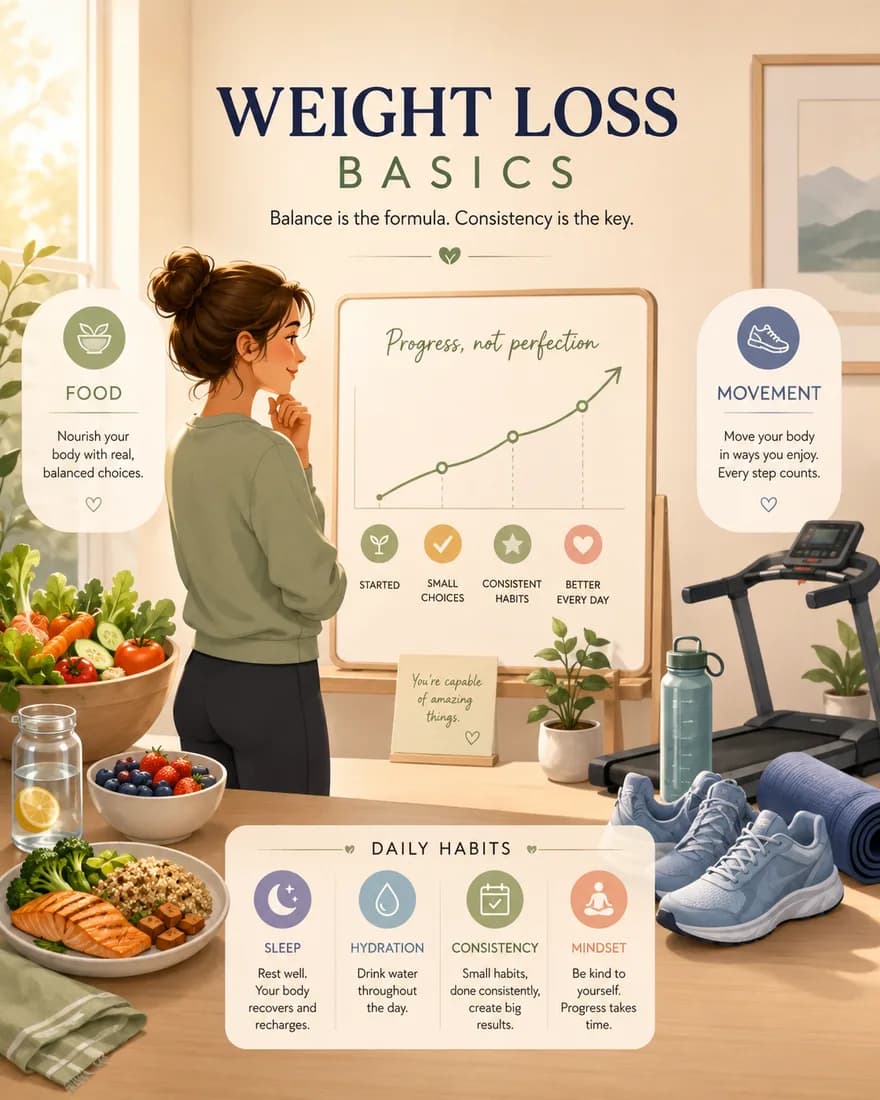
Weight loss can feel confusing. One person says to cut carbs. Another says to avoid fat. Someone else says you need a perfect meal plan, intense workouts, or a special supplement. But the truth is simpler than that. Weight loss is not magic, and it is not punishment. It is the result of small daily choices repeated over time. You do not need to understand complex science to begin. You only need to understand the basics, act with honesty, and stay consistent. Today, you will learn how weight loss really works — in a simple, calm, and realistic way.
Energy Balance in Simple Words
Your body uses energy every day. It uses energy to breathe, think, walk, work, digest food, move, exercise, sleep, and repair itself. Food gives your body energy. This energy is measured in calories. When you regularly eat more energy than your body uses, your body stores some of it. When you regularly eat less energy than your body uses, your body uses stored energy, and weight loss can happen. This is called energy balance. You do not need to fear it. It simply means your body responds to the relationship between what you eat and what you use.
Calorie Deficit Without Obsession
A calorie deficit means your body is getting slightly less energy than it needs, so it starts using stored energy. But this does not mean you need to obsess over every number. You do not need to weigh every gram of food forever. You do not need to panic over one meal. You do not need to become controlled by an app. The goal is awareness, not obsession. You can create a healthy deficit by making simple choices: Eating more filling foods. Reducing mindless snacks. Choosing smaller portions. Drinking fewer high-calorie drinks. Moving a little more. Being more honest with your meals. Small improvements can create real progress when repeated consistently.
Extreme Diets Usually Fail
Extreme diets often promise fast results. They may tell you to remove entire food groups, eat very little, skip too many meals, or follow strict rules that do not fit your life. At first, this can feel powerful because the scale may drop quickly. But many extreme diets are difficult to maintain. They can make you feel hungry, tired, stressed, guilty, or socially restricted. Eventually, your body and mind push back. Then people often quit, regain weight, and blame themselves. The problem is not always lack of discipline. The problem is often a plan that was too extreme to survive real life. A good plan should help you live better, not make your life smaller.
Slow and Steady Progress Is More Realistic
Fast weight loss sounds exciting, but realistic progress is usually slower. That does not mean it is weak. It means it is more sustainable. Slow progress gives you time to build habits, understand your body, adjust your food, improve your movement, and recover properly. You are not just trying to lose weight. You are trying to become the kind of person who can keep the progress. A slower path may feel less dramatic, but it often leads to better long-term results. The goal is not to rush for a few days. The goal is to continue for months and years.
Food Has the Biggest Role
Movement matters, but food usually has the biggest effect on weight loss. It is easier to eat extra calories than to burn them through exercise. This does not mean food should become your enemy. It means your food choices deserve attention. A strong weight loss meal usually includes: Protein to help fullness and muscle support. Fiber from vegetables, fruits, beans, or whole grains. Enough volume to feel satisfied. Reasonable portions of fats and carbohydrates. Foods you can actually repeat. You do not need perfect meals. You need meals that support your goal most of the time.
Movement Helps More Than You Think
Exercise is not just for burning calories. Movement helps your energy, mood, strength, heart health, blood sugar, sleep, confidence, and body shape. Even simple movement matters. Walking more, taking stairs when possible, doing beginner workouts, stretching, or going to the gym a few times per week can all support your progress. Think of movement as a signal to your body: “I am taking care of you.” “I want you to become stronger.” “I am building a better life.” Movement should not be punishment for eating. It should be part of the person you are becoming.
Sleep and Consistency Matter
Weight loss is not only about food and workouts. Poor sleep can increase hunger, reduce energy, make cravings stronger, and make it harder to make good decisions. Stress can also push you toward emotional eating or low motivation. That is why consistency matters more than perfect effort. A realistic health journey includes eating better, moving regularly, sleeping enough when possible, managing stress, and returning after imperfect days. You do not need to control every detail. You need to keep showing up.
Daily Weight Changes Are Normal
Your weight can change from day to day, even when you are doing everything right. This does not always mean you gained fat. Daily weight can change because of: Water retention. Salt intake. Carbohydrates. Digestion. Soreness after exercise. Sleep quality. Stress. Hormonal changes. Meal timing. Fat loss is not measured perfectly by one daily weigh-in. The bigger trend matters more than one number. Do not let one higher day destroy your confidence. Your body is not a machine. It changes, adjusts, and responds over time.
Common mistake
Thinking one bad meal ruins everything. One meal does not make you fail. One higher-calorie day does not erase your progress. The real problem happens when guilt turns one imperfect choice into a full week of quitting. Progress comes from your overall pattern, not one moment. Return at the next meal. That is how consistency is built.
Practical tip
Use the “next honest choice” rule. After any meal, snack, or mistake, ask yourself: “What is my next honest choice?” Maybe it is drinking water. Maybe it is eating a balanced dinner. Maybe it is going for a short walk. Maybe it is simply tracking what happened without lying to yourself. You do not need to fix the whole day. Just make the next choice better.
Today’s mission
Track one meal more honestly than usual. Choose one meal today and write down what you actually ate. Do not judge it. Do not hide anything. Do not try to make it look perfect. Just observe. Awareness is the first step toward control.
Follow this as a guided journey
Create a free account to unlock daily quizzes, missions, streaks and a coach that adapts to your progress.
Start free →