
Day 28
Measuring Progress Beyond the Scale
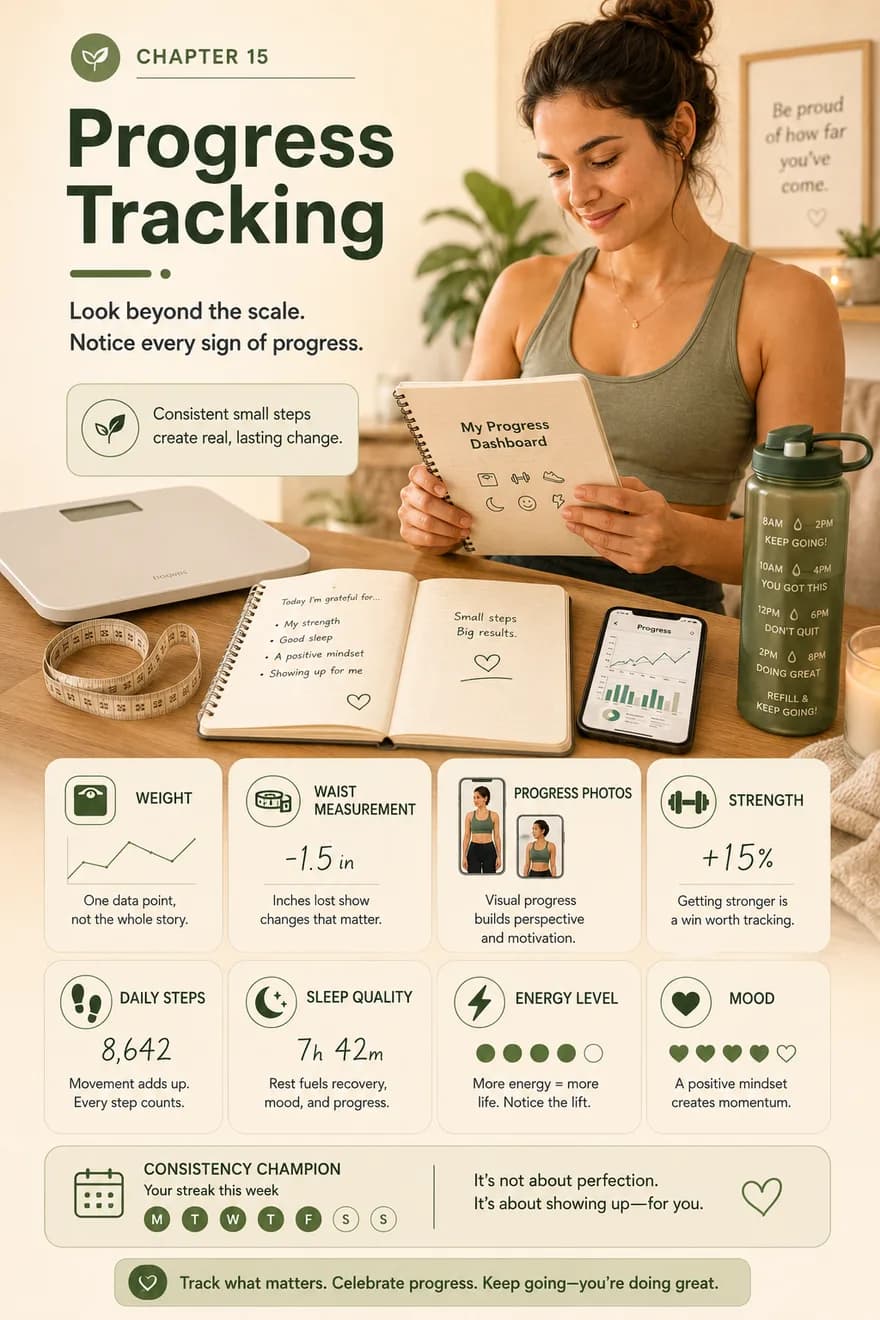
The scale can be useful, but it does not tell the whole story. Many people step on the scale, see one number, and let that number decide how they feel about themselves. If the number goes down, they feel successful. If it stays the same or goes up, they feel discouraged. But your health transformation is bigger than one number. Progress can show up in your waist, strength, energy, sleep, mood, clothes, endurance, confidence, and daily habits. Today, you will learn how to measure progress in a smarter, calmer, and more complete way.
Weight Is Useful, but Not the Only Metric
Body weight can give helpful information over time. If your goal is weight loss, tracking weight can show whether your overall habits are moving in the right direction. But weight is only one piece of feedback. It does not show: How much stronger you are. How your clothes fit. How your waist is changing. How your energy feels. How your sleep is improving. How your mood is changing. How consistent your habits have become. The scale measures total body weight. It does not measure your full progress.
Daily Weight Changes Are Normal
Your weight can change from day to day for many reasons. This does not always mean you gained or lost fat. Daily weight can change because of: Water retention Salt intake Carbohydrates Digestion Meal timing Sleep quality Stress Soreness after exercise Hydration Hormonal changes You may be doing the right things and still see the scale go up for a day or two. That is normal. The trend over time matters more than one daily number.
Waist Measurements Can Show Fat Loss
Waist measurement is a useful progress marker because many people lose fat around the waist during weight loss. Sometimes the scale moves slowly, but the waist changes. Measure around the same area each time, usually around the belly button or the narrowest comfortable point, depending on what you choose. The key is consistency: Same place Same time of day Same tape position Same relaxed posture You do not need to measure every day. Once per week or every two weeks is usually enough. A smaller waist can be a strong sign of progress, even when the scale is slow.
Progress Photos Can Reveal Changes
Progress photos can show changes that are hard to notice day by day. Because you see yourself every day, small changes may feel invisible. Photos help you compare more clearly over time. Take photos in similar conditions: Same lighting Same distance Same clothing style Same angles Same posture Same time of day if possible You do not need to share them with anyone. They are for your own awareness. Photos can help you see changes in posture, shape, waist, face, shoulders, and overall confidence.
Strength, Endurance, and Energy Count
Progress is not only about looking different. It is also about what your body can do. You may notice: You can walk longer. Stairs feel easier. You lift more weight. You do more repetitions. You recover faster. You have more energy during the day. You feel less out of breath. You move with better control. These are real signs that your body is becoming more capable. Do not ignore performance progress just because the scale is slow. A stronger body is progress.
Sleep, Mood, and Confidence Matter
Health progress also appears in how you feel. You may sleep better. You may wake up with more energy. You may feel calmer around food. You may have fewer cravings. You may feel more confident. You may feel proud after keeping promises to yourself. You may recover faster from mistakes. These changes matter because they make the journey more sustainable. A health transformation should not only change your body. It should improve your relationship with your body and your daily life.
Clothes Fit Can Be a Powerful Signal
Clothes often reveal progress before the scale does. A shirt may feel looser. Pants may close more easily. A belt may need a different hole. Workout clothes may feel more comfortable. You may feel better standing, walking, or sitting. This kind of progress is practical and real. If your clothes fit better, your body is changing — even if the scale is not moving as quickly as you expected. Pay attention to how your clothes feel, not only what the scale says.
Track Multiple Indicators
The smartest way to measure progress is to use more than one marker. You can track: Body weight Waist measurement Progress photos Workout performance Walking time or steps Energy level Sleep quality Mood Hunger and cravings Clothes fit Consistency with habits You do not need to track everything forever. Choose a few markers that feel useful and realistic. This gives you a fuller picture and protects you from overreacting to one number.
Common mistake
Letting the scale decide your mood for the whole day. A single weigh-in is just data. It is not a judgment of your worth, effort, or future success. If the scale goes up, pause before reacting. Look at the bigger pattern and check other progress markers too. One number should not control your confidence.
Practical tip
Use the “three-marker check.” Once per week, check three types of progress: One body marker: weight, waist, photo, or clothes fit One performance marker: walking, strength, endurance, or mobility One lifestyle marker: sleep, mood, energy, cravings, or consistency This helps you see progress from more than one angle. The more complete the picture, the less power one scale number has over you.
Today’s mission
Record one non-scale progress marker today. Choose one: Waist measurement Progress photo Clothes fit Energy level Sleep quality Mood Workout performance Walking time Number of steps Cravings level Consistency with one habit Write it down honestly. Your progress is bigger than the scale.
Follow this as a guided journey
Create a free account to unlock daily quizzes, missions, streaks and a coach that adapts to your progress.
Start free →