
Day 23
Stress, Eating Behavior, and Body Health
Stress is part of life. Work, money, family, health, responsibilities, uncertainty, and daily pressure can all affect how you feel and how you eat. If stress has ever changed your appetite, cravings, sleep, energy, or motivation, that does not mean you are weak. It means your body and mind are responding to pressure. Today is not about removing all stress from your life. That is not realistic. Today is about learning how stress affects your habits — and building one small way to respond with more calm and control.
Stress Can Affect Food Choices
When stress is high, healthy choices often feel harder. You may crave fast comfort, quick energy, or familiar foods. You may snack more, order heavier meals, skip cooking, eat late at night, or choose sweet, salty, fried, or creamy foods. This does not mean you have no discipline. Stress pushes your brain toward easier rewards. Food can feel like a fast way to relax, distract yourself, or feel better for a moment. The goal is not to judge this pattern. The goal is to notice it earlier.
Stress Can Increase Cravings
Stress can make cravings stronger. When your mind feels overloaded, the brain often looks for quick relief. This can make chocolate, chips, pastries, fast food, soda, or large portions feel more tempting than usual. A craving during stress is not a failure. It is a signal. Instead of asking, “Why am I so weak?” ask: “What am I feeling right now?” “What pressure am I carrying?” “What do I actually need?” Sometimes the answer is food. But sometimes the answer is rest, support, movement, fresh air, or a break.
Stress Can Lower Energy
Stress can make you feel tired, even if you did not move much. Mental pressure uses energy. When you are stressed for hours or days, simple habits can feel heavier. You may think: “I do not want to train.” “I do not want to cook.” “I just want something easy.” “I will restart tomorrow.” This is why your plan needs to be realistic. On stressful days, aim for smaller wins: A simple meal. A short walk. A glass of water. A calmer bedtime. One honest food log. One pause before snacking. Small wins keep the journey alive when life is difficult.
Stress Can Affect Sleep
Stress often follows people into bedtime. You may feel tired, but your mind stays active. You may scroll longer, sleep later, wake up during the night, or wake up feeling unrefreshed. Poor sleep can then make cravings, hunger, mood, and energy worse the next day. This creates a cycle: Stress affects sleep. Poor sleep affects food choices. Food choices affect energy. Low energy makes stress harder to handle. The cycle can be changed, but not through shame. It changes through small calming habits repeated often.
Stress Does Not Automatically Stop Weight Loss
Stress can make weight management harder, but it does not make progress impossible. You can still lose weight while dealing with stress. The key is understanding that stress may affect your habits, appetite, cravings, sleep, and consistency. So instead of blaming your body, look at your system. Ask: “Am I sleeping enough?” “Am I skipping meals?” “Am I eating emotionally?” “Am I moving less?” “Am I drinking more calories?” “Am I using food as my only stress relief?” Stress does not remove your ability to change. It just means your habits need more support.
Simple Stress-Reduction Tools
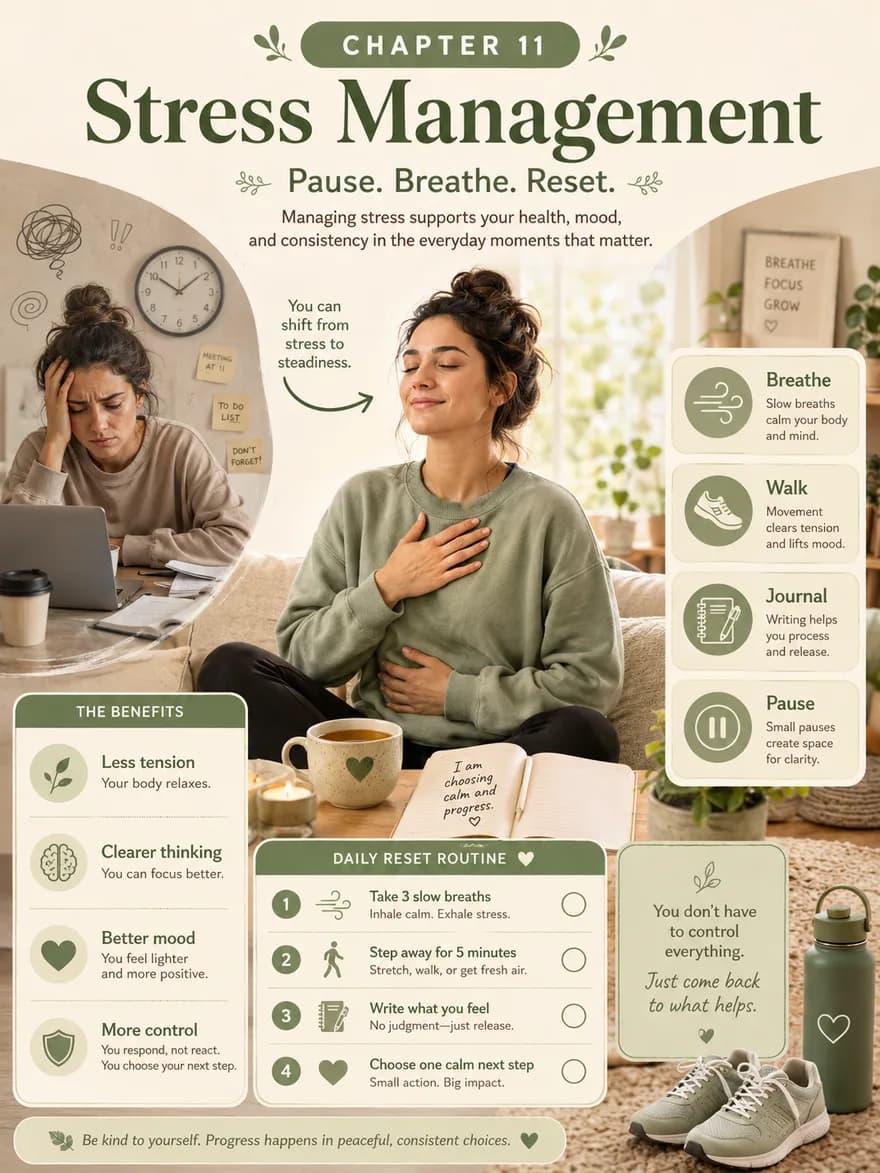
You do not need a complicated routine to reduce stress. Small tools can help your body and mind calm down. Try: Slow breathing A short walk Writing your thoughts Stretching Stepping outside Drinking water Taking a phone-free break Listening to calm music Cleaning one small area Talking to someone you trust Taking a shower Doing one small task instead of thinking about everything The goal is not to erase stress completely. The goal is to give your nervous system a small signal of safety and control.
Self-Compassion Matters
Stress is already heavy. Shame makes it heavier. If you overeat during stress and then attack yourself, you add more emotional pressure. That can lead to more cravings, more avoidance, and more “I already failed” thinking. Self-compassion does not mean making excuses. It means speaking to yourself in a way that helps you return. Instead of: “I ruined everything.” Try: “I had a stressful moment. Now I can make the next honest choice.” That mindset keeps you moving forward.
Build One Small Stress-Management Habit
Do not try to build ten stress habits at once. Choose one simple habit you can repeat. Examples: Five slow breaths before eating. A 5-minute walk after work. Writing one sentence about your mood. Putting the phone away for 10 minutes. Stretching before bed. Drinking water when stress cravings appear. Taking a short break before choosing a snack. A small stress-management habit gives you another option besides eating, scrolling, or avoiding. One small pause can change the next choice.
Common mistake
Trying to manage stress only with food. Food can comfort you for a short time, but it may not solve the real pressure behind the craving. If food becomes your only stress tool, overeating can become a repeated pattern. A better goal is to build more tools, so food is not your only source of relief.
Practical tip
Use the “one calm minute” method. When stress rises, take one minute and do this: Stop what you are doing. Relax your shoulders. Take a slow breath in. Exhale longer than you inhale. Repeat a few times. Ask: “What is my next helpful choice?” One minute will not fix everything, but it can interrupt automatic reactions. That pause is powerful.
Today’s mission
Do 5 minutes of calm breathing or a phone-free walk today. Choose one: Sit quietly and breathe slowly for 5 minutes. Walk without your phone for 5 minutes. Step outside and breathe calmly. Stretch gently while focusing on your breath. Write one sentence about what is stressing you. Do not try to solve your whole life today. Just give your body 5 minutes of calm.
Follow this as a guided journey
Create a free account to unlock daily quizzes, missions, streaks and a coach that adapts to your progress.
Start free →