
Day 22
Sleep, Recovery, and Weight Management
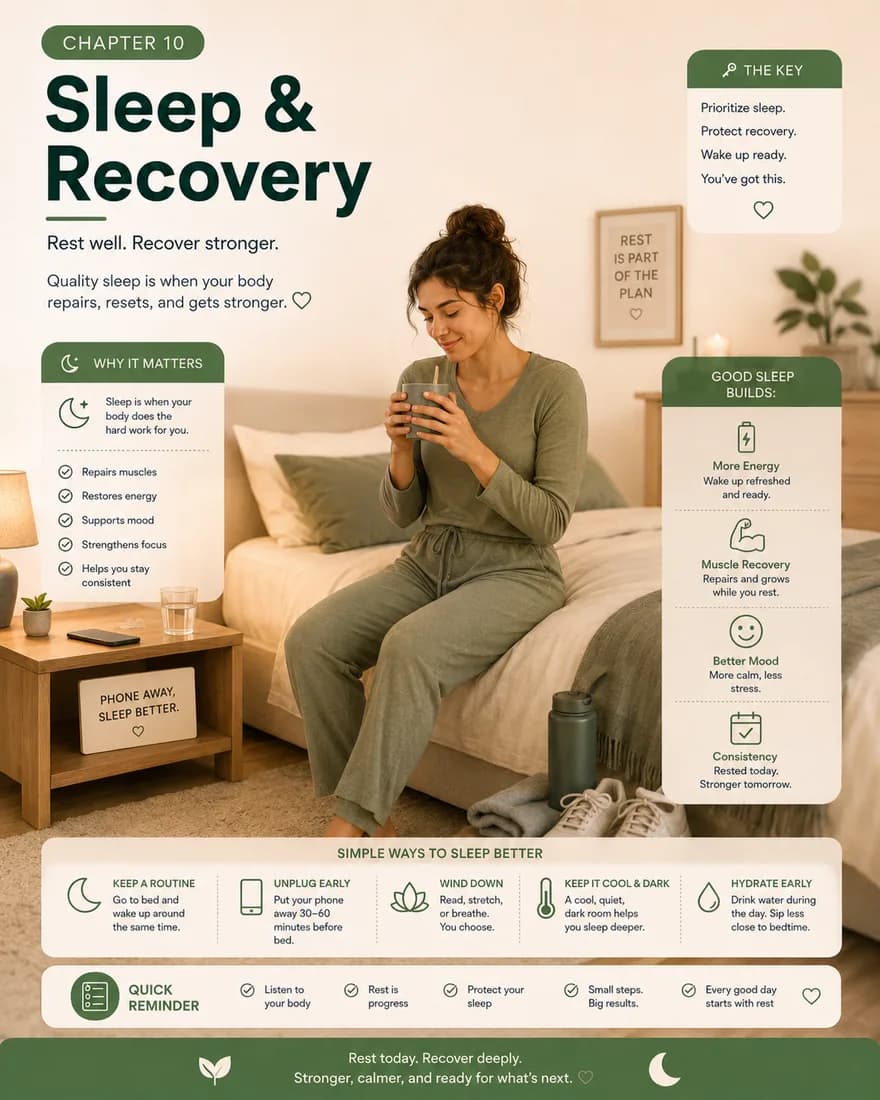
Progress does not only happen when you are eating well or exercising. Progress also happens when your body rests. Many people treat sleep like something optional, but sleep affects hunger, cravings, energy, mood, workout quality, and consistency. When sleep is poor, even simple healthy choices can feel harder. You do not need a perfect sleep schedule to improve your health. But learning to protect your recovery can make the whole journey easier. Today, you will learn why sleep matters and how small bedtime habits can support weight management.
Sleep Affects Hunger
When you sleep poorly, hunger can feel harder to manage. You may feel hungrier than usual, crave quick energy, or feel less satisfied after meals. This happens because poor sleep can affect the signals that help regulate appetite. That does not mean one bad night ruins your progress. It simply means sleep is part of the bigger picture. If you often feel out of control with food, do not only ask, “What did I eat?” Also ask: “How did I sleep?” Sometimes your body is not asking for more discipline. It is asking for better recovery.
Poor Sleep Can Make Cravings Stronger
Cravings often become louder when you are tired. After a short or restless night, your brain may look for fast comfort and quick energy. Sweet foods, salty snacks, creamy drinks, fried foods, or large portions may feel more tempting. This is not a character flaw. A tired brain wants easier rewards. That is why sleep is connected to emotional eating, snacking, and overeating. Better sleep does not remove all cravings, but it can make them easier to manage. Rested people usually have more control than exhausted people.
Sleep Supports Energy and Mood
Sleep affects how you feel during the day. Poor sleep can make you feel irritated, low-energy, stressed, foggy, or less patient. When your mood is low, healthy habits often feel harder. You may skip movement. You may choose heavier food. You may snack more. You may avoid cooking. You may feel less motivated. Better sleep helps you start the day with more mental space. A good night does not make life perfect, but it gives you a stronger foundation.
Sleep Improves Workout Quality
Your body needs sleep to recover from movement and training. When you sleep better, workouts often feel better. You may have more energy, better focus, better coordination, and better strength. When you sleep poorly, training may feel harder than usual. You may get tired faster, move with less control, or feel less motivated to start. Recovery is not separate from training. Recovery is part of training. Exercise gives your body the signal to improve. Sleep helps your body respond to that signal.
Recovery Is Part of Progress
Some people think progress only comes from doing more. More workouts. More steps. More intensity. More restriction. But your body also needs time to rebuild. Recovery includes sleep, rest days, easier movement, hydration, balanced meals, stretching, and stress management. If you never recover, your energy drops and consistency becomes harder. Rest is not laziness. Rest is how your body becomes ready to continue. A smart plan includes both effort and recovery.
Simple Sleep Habits
You do not need a perfect nighttime routine. Start with small habits that help your body understand it is time to slow down. Examples: Go to bed at a more consistent time. Wake up at a more consistent time. Keep the room dark and comfortable. Avoid very heavy meals right before bed. Use a short wind-down routine. Prepare tomorrow’s clothes, water, or breakfast earlier. Do gentle stretching or breathing. Write down worries instead of carrying them into bed. Your goal is not to force sleep instantly. Your goal is to make sleep more likely.
Caffeine Timing Matters
Caffeine can help energy and focus, but timing matters. Coffee, energy drinks, strong tea, and pre-workout drinks can stay active in your body for hours. If you take caffeine too late, it may make it harder to fall asleep or reduce sleep quality. Some people are more sensitive to caffeine than others. A simple rule is to keep caffeine earlier in the day when possible. If sleep is a problem, try reducing caffeine in the afternoon or evening and notice what changes. You do not need to quit coffee completely. Just use it wisely.
Screen Time and Bedtime Routine
Screens can keep your brain alert. Phones, social media, videos, games, work messages, and bright screens can make bedtime later than planned. Even when your body is tired, your mind may stay active. A realistic goal is to reduce screen time before sleep, not become perfect overnight. Try: Put the phone away 30 minutes earlier. Lower screen brightness. Avoid stressful content before bed. Use night mode. Charge your phone away from the bed. Replace scrolling with music, reading, breathing, or light stretching. A calm bedtime routine helps your body move from “active mode” to “recovery mode.”
Common mistake
Treating sleep as optional. Many people try to fix weight loss only with stricter food rules and harder workouts, while ignoring poor sleep. But if you are constantly tired, hungry, stressed, and craving, the plan becomes much harder to follow. Sleep is not a bonus habit. It is part of your health foundation.
Practical tip
Create a 30-minute landing routine. Thirty minutes before bed, choose two or three calming actions: Dim the lights. Put your phone away. Prepare clothes for tomorrow. Brush your teeth. Stretch gently. Write tomorrow’s top task. Take slow breaths. Read something calm. Keep it simple. The goal is to make bedtime easier, not add another stressful rule.
Today’s mission
Prepare for bed 30 minutes earlier today or reduce screen time before sleep. Choose one: Put your phone away earlier. Stop scrolling 30 minutes before bed. Dim the lights. Avoid caffeine late in the day. Do light stretching. Prepare tomorrow’s morning routine. Go to bed 30 minutes earlier than usual. If you cannot do it perfectly, still do one small part. One better night routine is progress.
Follow this as a guided journey
Create a free account to unlock daily quizzes, missions, streaks and a coach that adapts to your progress.
Start free →