
Day 16
Strength Training Basics for Beginners
Strength training can feel intimidating at first. You may think it is only for athletes, bodybuilders, or people who already know what they are doing. You may worry about looking awkward, using the wrong machine, or lifting too little. But strength training is for beginners too. You do not need to be strong to start. You start so you can become stronger. Today, you will learn what strength training means, why it helps your body, and how to begin safely without fear.
What Strength Training Means
Strength training means using your muscles against resistance. That resistance can come from your own body weight, a machine, dumbbells, resistance bands, or gym equipment. When your muscles work against resistance, your body receives a signal: “Keep this muscle.” “Build strength.” “Improve control.” “Become more capable.” Strength training is not only about lifting heavy weights. It is about teaching your body to move better, support itself better, and become stronger over time.
Different Ways to Strength Train
There are many beginner-friendly ways to do strength training. You can use: Bodyweight exercises, like squats, wall push-ups, glute bridges, or planks. Machines, which guide the movement and can feel safer for beginners. Dumbbells, which help build strength and control. Resistance bands, which are light, portable, and useful for home workouts. Cable machines, which allow controlled movement in many directions. You do not need to use everything. The best option is the one that feels safe, controlled, and repeatable for you.
Why Strength Training Helps With Weight Loss
Strength training does not always burn the most calories during the workout, but it supports weight loss in important ways. When you lose weight, you want to lose mostly fat while keeping as much muscle as possible. Strength training helps protect muscle during weight loss. This matters because muscle supports your shape, posture, metabolism, strength, and daily movement. If you only focus on eating less and doing cardio, you may lose weight but still feel weak, soft, or tired. Strength training helps you build a healthier body, not just a lighter body.
Strength Training Improves Body Shape
The scale only tells part of the story. Two people can weigh the same but look and feel different depending on muscle, posture, strength, and body composition. Strength training helps improve body shape by supporting muscle in areas like the legs, back, chest, shoulders, arms, and core. This does not mean you will become bulky overnight. Building large amounts of muscle takes time, effort, and specific training. For most beginners, strength training helps the body look firmer, stronger, and more balanced. You are not just chasing a smaller number. You are building a body that works better.
Form Matters More Than Heavy Weight
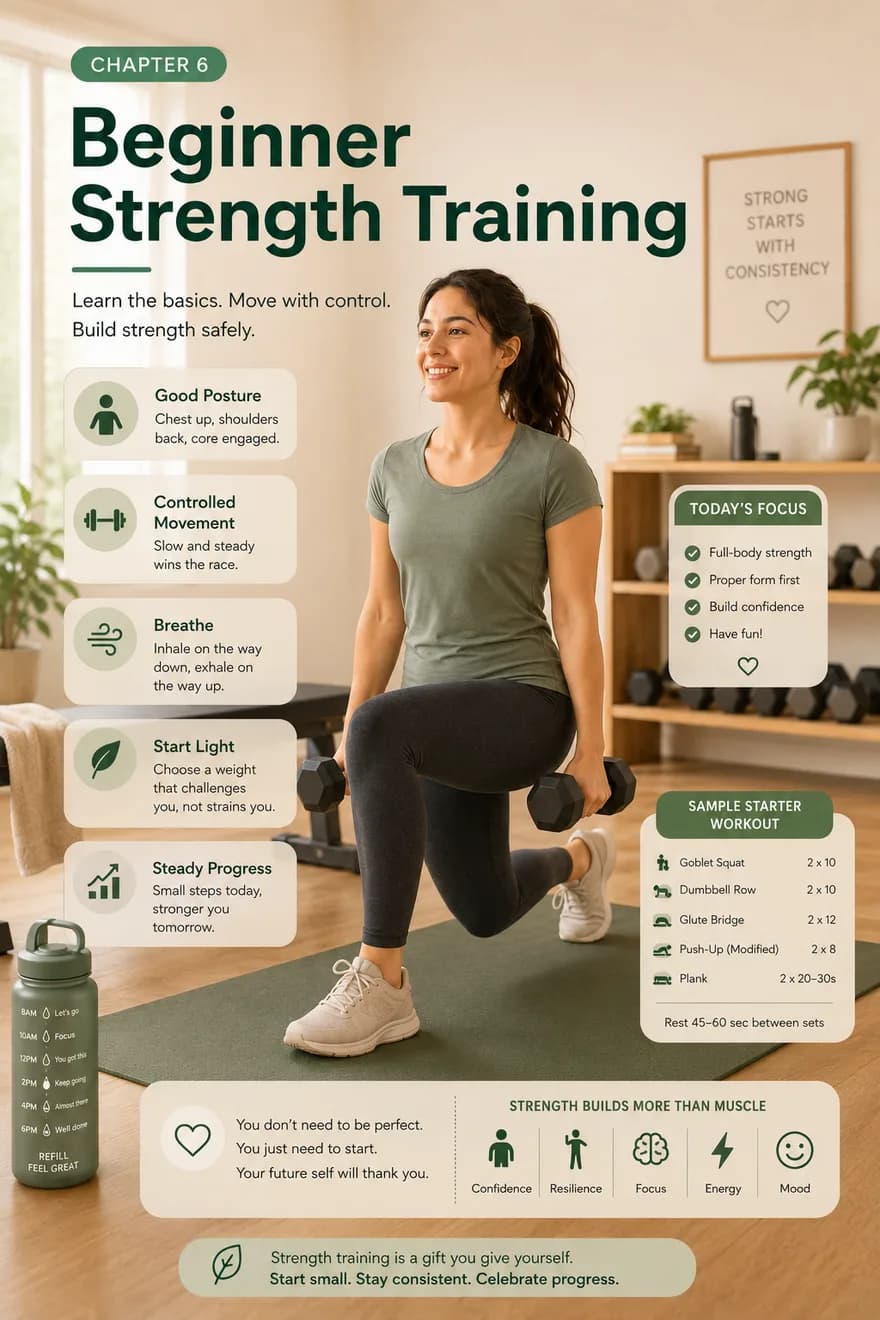
Good form means doing an exercise with control, proper posture, and safe movement. For beginners, form is more important than lifting heavy. A lighter weight with good form is better than a heavy weight with poor control. Poor form can increase the risk of pain, injury, and bad habits. Good form helps you train the right muscles and progress safely. Focus on: Moving slowly and with control. Keeping your body stable. Avoiding sudden jerky movement. Breathing during the exercise. Stopping if you feel sharp pain. Learning the movement before increasing weight. Strength is built through patience, not ego.
Full-Body Training for Beginners
Beginners usually do well with full-body training. Full-body training means you train the main muscle groups in one session instead of focusing only on one body part. A simple full-body routine may include: One lower-body movement One push movement One pull movement One core movement One light cardio or mobility section Examples: Squat or leg press Chest press or wall push-up Seated row or resistance band row Glute bridge or hip hinge Plank or dead bug Full-body training is useful because it gives your whole body practice, builds balance, and does not require training every day. For many beginners, 2 to 3 strength sessions per week is a realistic starting point.
How to Start Without Fear
You do not need to know everything before you begin. Start with one basic movement. Learn it slowly. Practice it with light resistance. Watch your form. Ask for help if needed. Use machines if they make you feel safer. You can begin with simple exercises like: Chair squat Wall push-up Machine chest press Seated row Leg press Glute bridge Resistance band pull-apart Dumbbell Romanian deadlift with very light weight Your first goal is not to impress anyone. Your first goal is to learn, move safely, and build confidence.
Progress Comes From Repetition
Strength training improves through repeated practice. The first session may feel awkward. That is normal. Your body and brain are learning new movement patterns. Over time, exercises feel more familiar, your control improves, and your confidence grows. Progress may look like: Better form More control Less fear More repetitions Slightly heavier weight Less fatigue Better posture More confidence in the gym Do not measure progress only by how much weight you lift. For a beginner, learning proper movement is already a major win.
Common mistake
Trying to lift too heavy too soon. Many beginners think heavier weight means better progress. But if the weight is too heavy, form breaks down and injury risk increases. Start lighter than your ego wants. Master the movement first. Add weight slowly later. Safe progress beats rushed progress every time.
Practical tip
Use the “control test.” During any strength exercise, ask: “Can I control the weight on the way up and the way down?” If the answer is no, the weight may be too heavy. Good strength training should feel challenging, but controlled. You should not need to swing, rush, or force the movement. Control first. Weight later.
Today’s mission
Learn or perform one basic strength movement with proper form. Choose one: Chair squat Wall push-up Glute bridge Seated row Leg press Machine chest press Resistance band row Dead bug Light dumbbell press Do it slowly. Focus on posture, breathing, and control. The goal is not heavy weight. The goal is proper movement.
Follow this as a guided journey
Create a free account to unlock daily quizzes, missions, streaks and a coach that adapts to your progress.
Start free →