
Day 25
Recovering After Mistakes
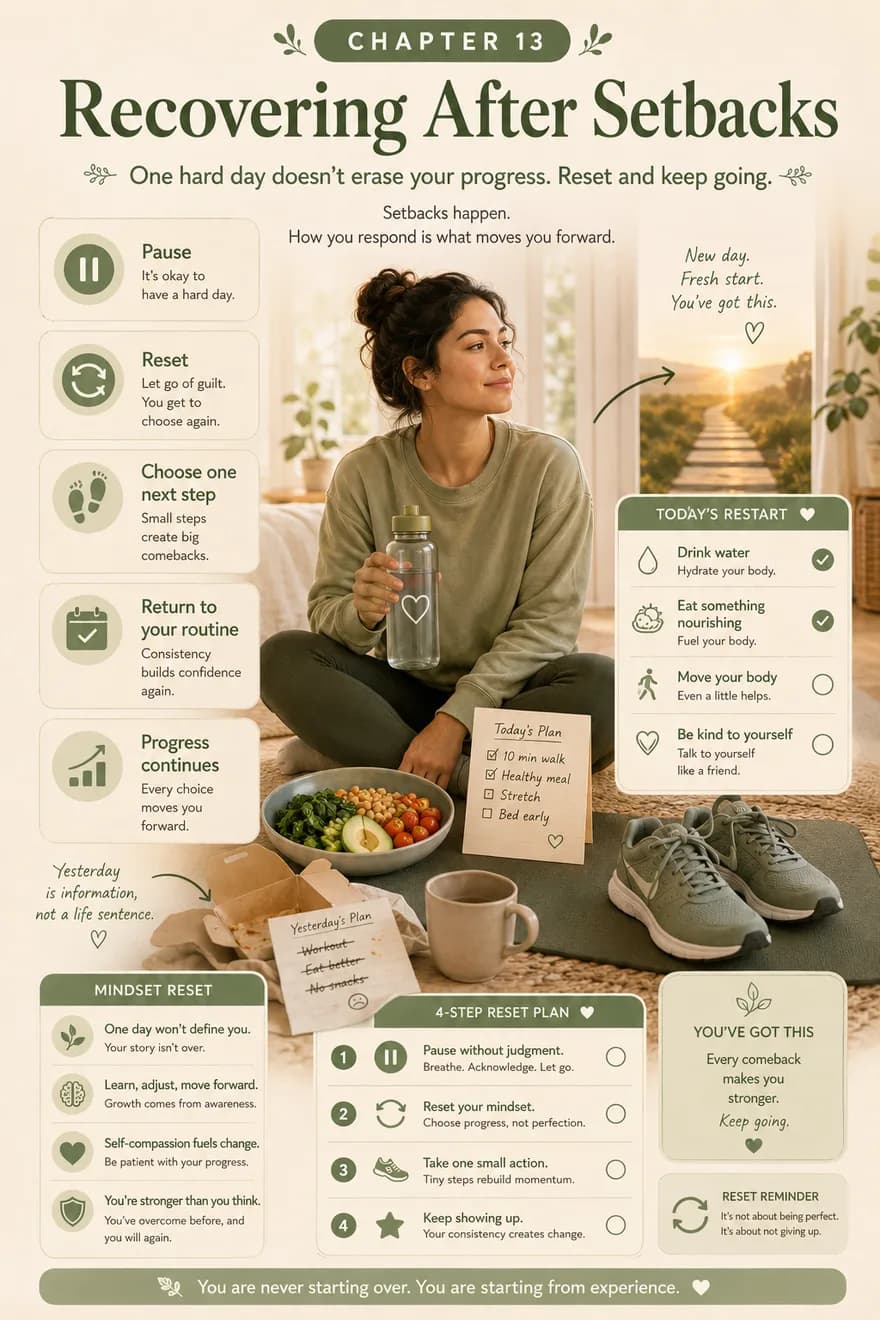
You will not do this journey perfectly. You may overeat. You may miss a workout. You may skip tracking. You may sleep badly. You may have a stressful day and fall back into old habits. That does not mean the journey is over. A real transformation is not built by never making mistakes. It is built by learning how to come back faster. Today, you will learn how to recover after imperfect moments without guilt, punishment, or quitting.
One Bad Meal Does Not Ruin Progress
One meal cannot erase your whole journey. Progress is built from your overall pattern, not one single choice. A higher-calorie meal, a dessert, fast food, or an unplanned snack may slow the day slightly, but it does not destroy everything. The real danger is not the meal itself. The real danger is the thought that comes after: “I already ruined it, so I might as well keep going.” That thought turns one meal into a full day, weekend, or week of giving up. The better response is: “That happened. Now I return.”
Missing One Workout Is Not Failure
Missing one workout does not mean you are lazy. Life happens. Work gets busy. Sleep is poor. Stress rises. Energy drops. Plans change. A missed workout is only a problem if it becomes a reason to stop completely. You do not need to punish yourself with an extreme workout tomorrow. Just return to the next realistic session. You can also do a smaller version: A short walk. A 10-minute home workout. A mobility routine. A few sets of one exercise. A normal workout the next day. The habit is not broken when you miss once. It is broken when you stop returning.
The Danger of All-or-Nothing Thinking
All-or-nothing thinking says: “If I cannot do it perfectly, I failed.” This mindset is one of the biggest reasons people quit. It turns small mistakes into emotional disasters. Examples: “I ate one bad meal, so the whole day is ruined.” “I missed Monday’s workout, so I will restart next week.” “I forgot to log lunch, so I will stop tracking today.” “I gained weight today, so nothing is working.” “I had dessert, so I have no discipline.” This thinking is not helpful. Real progress lives in the middle. Not perfect. Not quitting. Returning.
Restart Quickly
The faster you return, the smaller the mistake becomes. You do not need a dramatic restart. You do not need to wait until Monday, next month, or a “perfect” day. Restart at the next choice. After overeating, drink water and eat a balanced next meal. After missing a workout, take a short walk or plan the next session. After skipping tracking, log the next meal. After poor sleep, keep the day simple and protect bedtime. After stress eating, pause and write what triggered it. The next choice is always available. That is where your power is.
What to Do After Overeating
After overeating, do not panic. Do not punish yourself. Do not skip every meal. Do not do extreme cardio. Do not call yourself weak. Do not turn the moment into a full-day binge. Instead, use a calm recovery plan: Drink water. Take a gentle walk if it feels good. Eat normally at the next meal. Choose protein and vegetables. Avoid extreme restriction. Notice what triggered the overeating. Sleep as well as you can. Return to your normal routine. Your body can handle one imperfect eating moment. Help it return instead of adding more stress.
Guilt Often Makes the Cycle Worse
Guilt may feel like responsibility, but it often creates more damage. When you feel guilty, you may think you need to punish yourself. That can lead to restriction, stress, stronger cravings, and more overeating later. The cycle looks like this: Mistake. Guilt. Restriction. Cravings. Overeating. More guilt. To break the cycle, you need a different response. Mistake. Awareness. Compassion. Next honest choice. Return. Self-compassion does not mean ignoring mistakes. It means responding in a way that actually helps you recover.
Build a Comeback Plan
A comeback plan is a simple plan for what you will do after a mistake. You should create it before you need it. Examples: If I overeat, I will drink water, avoid guilt, and eat a balanced next meal. If I miss a workout, I will do a short walk or return at the next planned session. If I skip tracking, I will log the next meal instead of quitting the day. If I sleep badly, I will keep movement light and protect bedtime tonight. If I feel guilty, I will say my comeback sentence and take one useful action. A comeback plan protects you from emotional decisions. It gives you a path back.
Progress Is Built by Returning
People who succeed are not people who never make mistakes. They are people who return faster. They do not let one imperfect day become their identity. They learn. They adjust. They continue. This is the skill you are building now. Not perfection. Not punishment. Not starting over every week. Returning. Every time you return, you prove that your journey is stronger than one mistake.
Common mistake
Trying to “make up” for mistakes with punishment. Skipping meals, doing extreme cardio, or eating almost nothing after overeating usually makes the cycle worse. A better response is to return to normal healthy habits as soon as possible. Your body does not need punishment. It needs consistency.
Practical tip
Use the “next choice reset.” After any mistake, ask: “What is the next helpful choice I can make?” Not the perfect choice. Not the hardest choice. Not the punishment choice. The next helpful choice. That might be water, a walk, a balanced meal, tracking honestly, sleeping earlier, or simply stopping the negative self-talk. One next choice can restart momentum.
Today’s mission
Write one comeback sentence you can use after mistakes. Examples: “One mistake is not the end of my journey.” “I can return at the next choice.” “I do not need perfection to make progress.” “This moment is feedback, not failure.” “I will respond with consistency, not punishment.” “I am allowed to restart today.” Choose one sentence and save it somewhere visible. Use it when guilt tries to take over.
Follow this as a guided journey
Create a free account to unlock daily quizzes, missions, streaks and a coach that adapts to your progress.
Start free →